
The first build of a medical PCB prototype often has a much higher unit cost than a later repeat build. The main reason is simple: a low quantity does not remove engineering review, manufacturing setup, programming, inspection planning, or test preparation. It spreads that work across fewer assemblies.
There is no universal medical premium or fixed multiplier. The difference depends on the PCB design, BOM, quantity, sourcing constraints, inspection and test scope, required records, and how much of the setup can be reused. A quote for five boards with a new fixture and a difficult BOM is not comparable with a repeat order for 200 boards built from stable files.
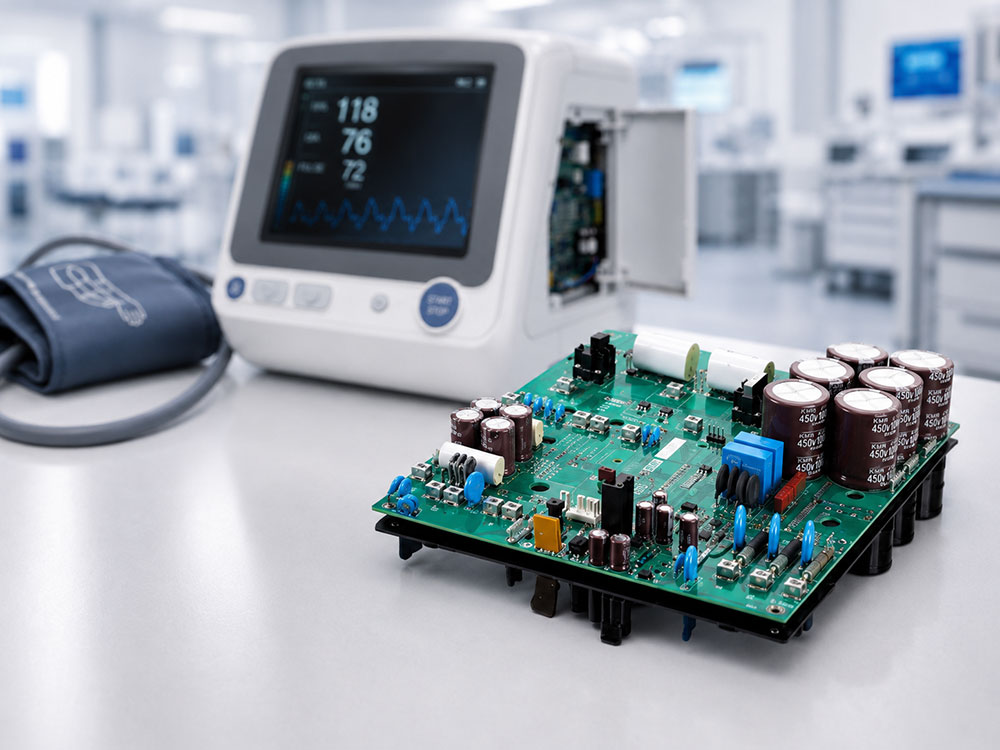
This guide explains how to separate one-time charges from recurring costs, why design changes make early builds expensive, and how to reduce avoidable spending without removing controls that the project actually requires. For a broader overview of PCB fabrication, components, assembly, and testing costs, see the medical PCB assembly cost guide.
Why the First Build Has a High Unit Cost
A prototype quote contains more than placement and soldering. Before the first board reaches the SMT line, the manufacturer may need to review the fabrication data, check the BOM, resolve file conflicts, create machine programs, order a stencil, prepare programming files, define inspection steps, and develop a test method. Much of that work is required whether the order contains 10 boards or 100.
A useful way to understand the unit price is:
Unit cost equals recurring cost per assembly plus one-time project costs divided by the build quantity.
For illustration only, if a build has $600 of one-time engineering and tooling charges, those charges add $60 per unit to a 10-board build but $6 per unit to a 100-board build. The example does not represent a market price; it only shows how quantity changes the allocation of fixed work.
| Cost area | Typical first-build work | What may change on a repeat build |
|---|---|---|
| Engineering review | Confirm revisions, PCB requirements, BOM data, assembly information, and unresolved questions | A focused review may be sufficient when the approved data have not changed |
| Manufacturing setup | Create programs, prepare the stencil, set up the line, and verify the first assembly | Programs and tooling may be reusable if the design and process remain compatible |
| Programming and testing | Develop instructions, interfaces, fixtures, limits, and result formats | Validated methods may be reused, with checks for revision compatibility |
| Materials | Buy low quantities while meeting supplier pack sizes, minimum order quantities, and attrition needs | Existing approved stock and larger purchasing quantities may reduce the per-unit burden |
| Documentation | Define records, identifiers, approvals, and the build package | Templates and established workflows may be reused, but records still need to be created for the new build |
Charges That Are Often Specific to the First Build
Not every supplier labels charges in the same way. Some list non-recurring engineering costs separately, while others include them in the unit price. Ask for enough detail to identify which charges will apply again if the next order uses the same revision.
Engineering Review and Data Preparation
The manufacturer must determine which files govern the build and whether they provide enough information for fabrication, assembly, programming, inspection, and testing. A review may cover Gerber and drill data, stackup requirements, BOM manufacturer part numbers, package and footprint compatibility, pick-and-place data, polarity, DNP status, assembly drawings, and special process notes.
If the files disagree, the project may require several clarification cycles before production can be released. The medical PCB prototyping process explains what typically happens after the Gerber files and BOM are submitted.
Stencil Programs and Production Setup
A new build may require an SMT stencil, placement and inspection programs, feeder preparation, reflow-profile work, process instructions, and first-article verification. These activities are not eliminated by a small quantity. In fact, a short run can spend more time in preparation than in continuous placement.
Reuse is possible only when the relevant inputs remain compatible. A change to the PCB revision, panel, pad geometry, component package, assembly side, or process requirement may require part or all of the setup to be repeated.
Programming and Test Development
If the assembly requires firmware programming or functional testing, the first build may need a programming method, connector or pogo-pin interface, fixture, test script, pass and fail limits, operator instructions, and a result record. A manually operated bench test can be appropriate during early engineering work, but it still needs a defined scope if the customer expects comparable results across the batch.
Testing becomes more expensive when the requirements arrive after the board is assembled, when test access is poor, or when the supplier must infer limits from an incomplete description. Defining the test objective early can reduce both fixture rework and repeated engineering communication.
Low Quantity Material Purchasing
A prototype may need only a few pieces of each component, but distributors and manufacturers may sell parts in larger package quantities. The assembler may also need additional pieces for machine setup, process loss, or first-article work. These effects are especially visible when the BOM contains costly ICs, connectors, sensors, custom parts, or components with a large minimum order quantity.
For each excess-material charge, confirm who owns the remaining stock, how it will be stored, and whether it can be used on the next approved build. A low unit price can be misleading if the quotation excludes material that will be billed later.
Costs That Continue on Every Build
Some first-build work can be reused, but the new order still consumes boards, components, assembly capacity, inspection time, test time, and production records. These recurring costs should not be confused with one-time setup.
| Recurring area | What drives the cost | What the buyer should confirm |
|---|---|---|
| Bare PCB | Layer count, board size, panel utilization, material, surface finish, via structure, impedance, and tolerances | Fabrication specification and whether pricing includes scrap or coupon requirements |
| Components | MPNs, sourcing channel, order quantity, packaging, availability, and approved alternatives | Quoted brands, date or lot requirements, excess material, and substitution approval |
| Assembly | Placement count, package types, assembly sides, THT work, hand operations, cleaning, coating, and rework access | Processes included and charges for special operations |
| Inspection and test | Required methods, coverage, fixture time, program time, limits, and reporting | What each method covers and whether every board or a sample is tested |
| Records and traceability | Lot or serial-level data, inspection results, test results, deviations, and retention requirements | Required record fields, format, retention period, and delivery method |
Quality System and Inspection Requirements Must Be Defined
ISO 13485 specifies quality management system requirements for organizations involved in medical devices and related services. It does not assign a fixed price premium to a PCB assembly, mandate one component grade, or prescribe the same inspection sequence for every medical PCBA.
In the United States, the FDA Quality Management System Regulation became effective on February 2, 2026 and incorporates ISO 13485:2016 by reference. The FDA states that the regulation applies to finished device manufacturers, subject to the definitions and exceptions in the rule. The finished device manufacturer remains responsible for defining and controlling the outsourced work needed for its device. The supplier and customer should therefore agree on the manufacturing, inspection, traceability, and record requirements that apply to the PCBA project.
The same principle applies to workmanship and inspection. IPC J-STD-001J and IPC-A-610J address soldering process requirements and post-assembly acceptance criteria. The applicable revision, class, and customer-specific criteria should be stated in the contract or build documentation. A medical application does not automatically require IPC Class 3.
AOI, X-ray, electrical test, and functional test cover different risks. X-ray is useful for hidden solder joints such as BGA connections, but it is not automatically required for every component on every medical prototype. Inspection coverage should reflect package types, process risk, product requirements, and the agreed acceptance plan. SugaMed’s guide to PCB assembly inspection and testing explains the role and limits of common methods.
A similar caution applies to the phrase medical-grade component. Some parts have specific qualifications, reliability data, temperature ranges, lifecycle support, or manufacturer claims that make them appropriate for a project. Others are ordinary commercial or industrial components selected through the device manufacturer’s design and risk process. The BOM should identify the required MPNs and approved alternatives instead of relying on a vague grade label.
Design Changes Multiply Prototype Cost
The first build is intended to reveal design and manufacturing issues, so change is normal. The cost depends on when the change is discovered and which prepared items become unusable.
A PCB change can require new bare boards and may affect the stencil, panel, placement program, inspection program, fixture, and test limits. A component change can affect sourcing, footprints, feeder setup, firmware, calibration, or performance verification. A late test change can require fixture modification after assembly has already been completed.
Complete DFM Before Fabrication Release
An early PCB assembly DFM and DFA review can identify mismatched footprints, insufficient test access, unclear polarity, panel constraints, and special assembly operations before boards and tooling are ordered. DFM does not eliminate design iteration, but it can prevent manufacturing-data errors from becoming a second build.
Freeze One Valid Package for Each Build
Gerber files, drill data, BOM, pick-and-place data, assembly drawings, fabrication requirements, firmware, and test instructions should identify the same intended build. If a new revision is released, the change should be documented and the affected preparation reviewed before production continues.
Approve Alternatives Before the Shortage Becomes Urgent
Potential substitutes can be evaluated before the RFQ or procurement deadline. The review should cover form, fit, function, package, electrical characteristics, software impact, reliability data, lifecycle status, and any regulatory or validation effect relevant to the device. The assembler should not replace a critical component only because a cheaper or faster part appears similar.
Ways to Reduce Cost Without Weakening Required Controls
The best savings remove repeated preparation, avoid preventable changes, or align the build with the current development question. They do not come from silently reducing an approved inspection or traceability requirement.
| Action | Cost it can reduce | Important limit |
|---|---|---|
| Submit one consistent file package | Engineering clarification and quotation revision | Do not hide unresolved design assumptions |
| Review the BOM and alternatives early | Expedite purchases, excess stock, and last-minute substitution work | Use customer-approved parts and sourcing rules |
| Match quantity to the validation plan | Fixed-cost allocation and repeated small-run setup | Do not build excess inventory while the design is unstable |
| Define test scope and limits before tooling | Fixture changes, duplicate testing, and engineering time | Retain the coverage needed for the build objective |
| Reuse programs fixtures and records | Repeat engineering and tooling charges | Verify compatibility after every relevant revision |
| Allow realistic procurement and production time | Expedite freight, rush handling, and schedule-driven substitutions | Lead time should still reflect the project milestone |
| Define the required documentation package | Unrequested reports and duplicate formatting | Keep records required by the quality agreement and device program |
How to Compare Prototype Quotes
Two suppliers can return different totals because they have priced different scopes. Before selecting the lowest number, normalize the quotations by asking the following questions:
- Does the quote include bare PCB fabrication, components, assembly, inspection, testing, and shipping?
- Which charges are one-time and which will recur on the next unchanged build?
- Are the stencil, programming setup, inspection program, and test fixture listed separately?
- Which component manufacturers, MPNs, sourcing channels, and package quantities are assumed?
- Who owns excess material and can it be reserved for repeat orders?
- Which inspection and test methods are included, and what is their coverage?
- Which reports, traceability fields, and retention requirements are included?
- What design or BOM changes would trigger new engineering or tooling charges?
- Is the quoted lead time based on material availability and approved inputs?
- Which assumptions could change the price after order placement?
The guide to comparing PCB assembly quotes provides a broader scope checklist. The goal is to compare the same deliverables, not only the displayed unit price.
Frequently Asked Questions
Why Is Medical Prototype PCB Assembly So Expensive Per Board
Low quantity concentrates engineering review, stencil and program preparation, production setup, sourcing overhead, and test development into a small number of assemblies. The BOM and project-specific inspection or documentation requirements can add further cost.
Does ISO 13485 Add a Fixed Percentage to the Quote
No fixed percentage comes from ISO 13485. The cost effect comes from the controls, records, supplier responsibilities, traceability, inspection, and testing defined for the project and the manufacturer’s quality system.
Are AOI and X Ray Mandatory for Every Medical PCB Prototype
No universal rule requires the same AOI or X-ray coverage for every medical PCBA. The appropriate methods depend on the assembly, package types, process risks, customer specifications, applicable standards, and agreed inspection plan.
Should I Increase the Quantity to Reduce Unit Cost
Only when the extra units support the current validation or pilot plan and the design is stable enough to justify them. Building more boards can spread fixed costs, but obsolete inventory after a design change can cost more than the apparent unit-price saving.
What Information Is Needed for an Accurate Prototype Quote
Provide the current Gerber and drill data, BOM with MPNs, pick-and-place file, assembly and fabrication drawings, quantity, target schedule, and any programming, inspection, test, traceability, or special process requirements. Identify the governing revision and disclose unresolved items so that the supplier can separate confirmed scope from assumptions.
Plan the First Build Around the Next Decision
The first medical PCB prototype costs more per board because it combines physical assemblies with the work needed to make the build possible and reviewable. Some of that preparation can support future orders, but only if the design, materials, process, and test method remain compatible.
Cost optimization starts by defining what the current build must prove. Align the quantity, inspection, testing, and records with that objective; review the design and BOM before release; and separate reusable setup from recurring production costs. This gives engineering and procurement teams a clearer basis for deciding whether a quotation is complete and whether a lower price represents a real saving.
If you are preparing a first build, send the current manufacturing package and expected test scope to SugaMed for a medical PCB assembly review and quotation.