
Hemodialysis Machine PCB Assembly
Home » Therapeutic Device » Hemodialysis Machine PCB Assembly
SugaMed provides PCB assembly for control, sensing, pump and valve, power, display, alarm, and communication electronics used in hemodialysis equipment. We support engineering builds, pilot runs, low-volume production, repeat manufacturing, and multi-board box-build integration.
Our medical PCB assembly service follows customer-approved fabrication data, BOMs, workmanship criteria, programming files, inspection requirements, test procedures, and traceability plans.
- ISO 13485 · ISO 9001
- IPC-A-610 Class 2 or Class 3
- 15 SMT Lines
What Is Hemodialysis Machine PCB Assembly?
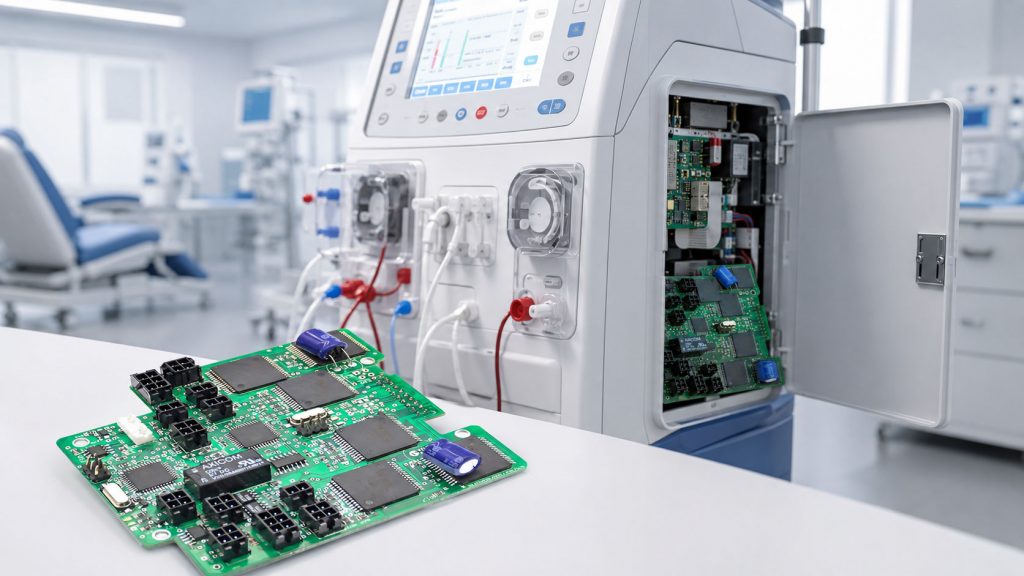
Hemodialysis machine PCB assembly refers to the manufacturing of printed circuit board assemblies that support the electronic control, monitoring, and communication functions inside dialysis equipment.
A modern hemodialysis system may coordinate blood and dialysate flow, blood pumps, heparin delivery, pressure monitoring, temperature regulation, conductivity measurement, ultrafiltration control, air bubble detection, blood leak detection, alarms, user interfaces, power distribution, and data communication.
The exact electronic architecture varies between manufacturers. Some functions may be integrated into a main control assembly, while others are distributed across dedicated sensor, drive, power, display, or communication boards.
For the PCBA manufacturer, the challenge is not simply placing components onto a PCB. Component control, soldering consistency, hidden-joint inspection, firmware revision management, functional testing, and production traceability all need to remain controlled throughout repeated builds.
For hemodialysis electronics projects, SugaMed defines the manufacturing approach according to the customer’s actual design and quality requirements rather than applying the same process to every medical assembly.
Typical Electronic Assemblies in Hemodialysis Equipment
Hemodialysis platforms vary in architecture, but their electronics generally support three broad areas: system control and user interaction, pump and power control, and sensing and safety-related monitoring. Depending on the equipment design, these functions may be integrated into one PCB assembly or distributed across several boards.
System Control, HMI and Communication Assemblies
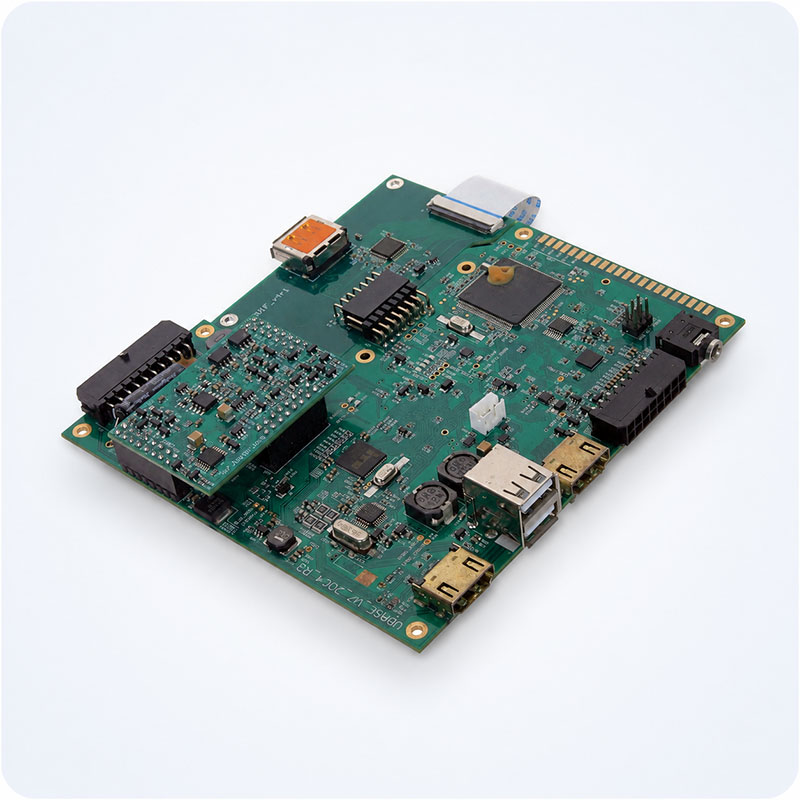
These assemblies coordinate system operation, process treatment-related data, support operator interaction, and manage communication between internal modules and external interfaces.
Manufacturing attention typically focuses on fine-pitch placement, connector assembly, firmware control, revision management, and functional verification.
Pump, Valve and Power Control Assemblies
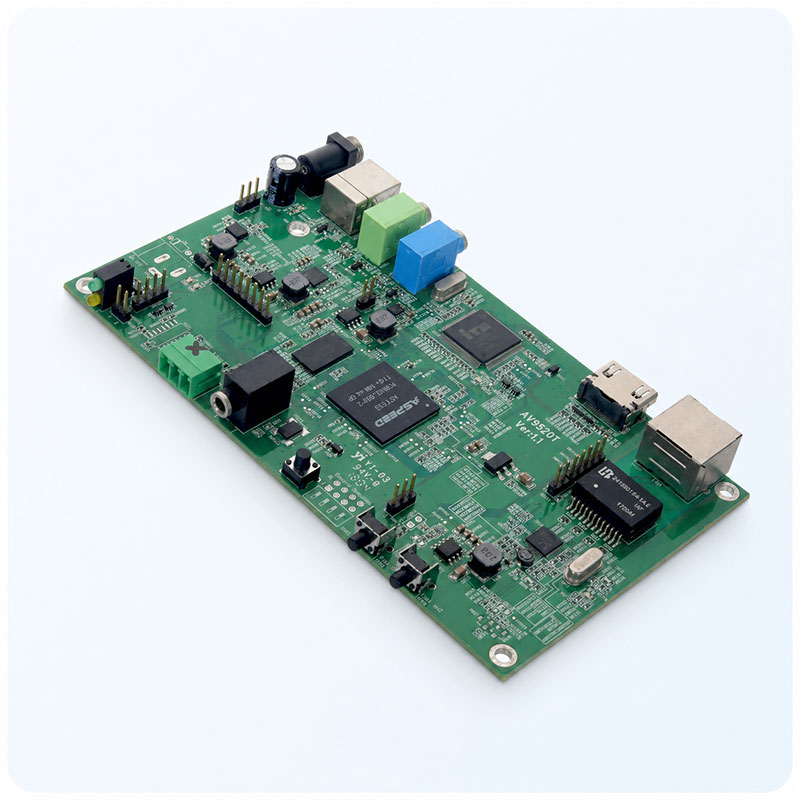
These assemblies support electromechanical functions such as blood pumps, heparin pumps, dialysate flow-control components, valves, motors, and related power-control circuits.
Manufacturing attention typically focuses on power-device soldering, through-hole assembly, connector reliability, higher-thermal-mass components, and mechanically stressed interfaces.
Sensor, Monitoring and Alarm Assemblies
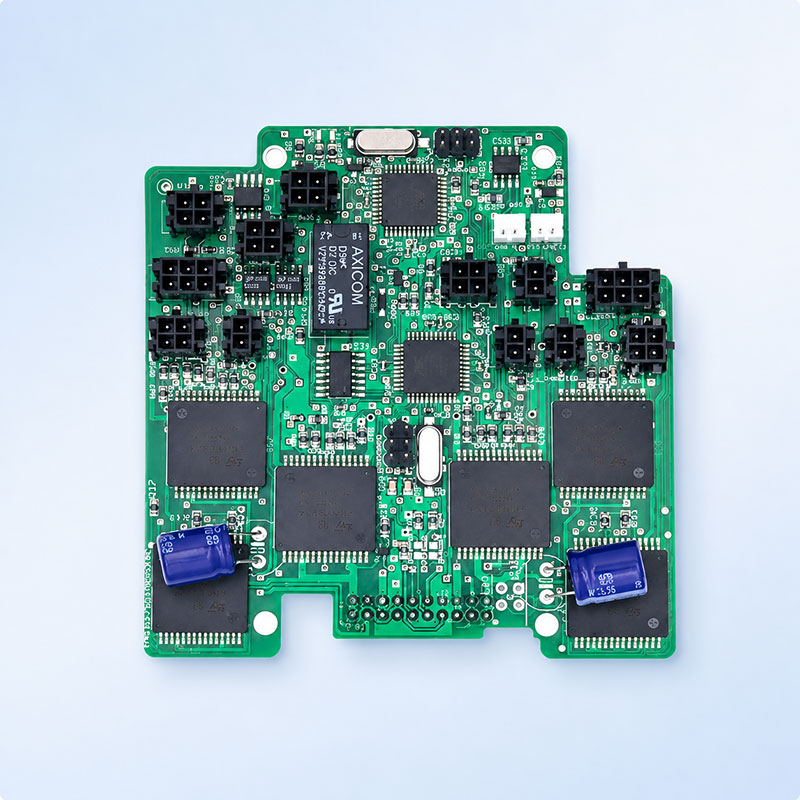
These assemblies support pressure, temperature, conductivity, air bubble detection, blood leak detection, and alarm-related monitoring functions within the hemodialysis platform.
Manufacturing attention typically focuses on component consistency, approved substitutions, assembly cleanliness, inspection coverage, firmware control, and customer-defined functional testing.
Medical Electronics Manufacturing Capacity
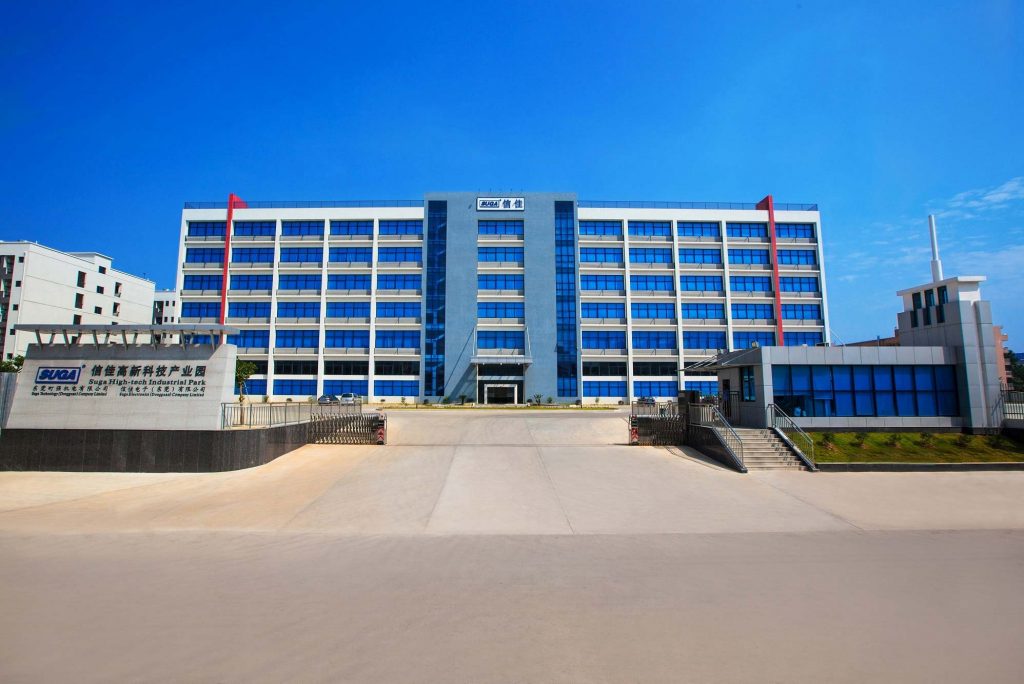
SugaMed operates a manufacturing facility with 15 Fuji and Yamaha SMT lines, 10 automatic through-hole insertion machines, multiple dedicated bonding stations, 18 PCBA assembly lines, and 40+ box-build assembly lines. Total headcount exceeds 1,100 employees.
Within this capacity, dedicated medical production lines are kept separate from industrial and consumer programs, supporting the controlled materials, process documentation, inspection, and traceability requirements expected in ISO 13485 medical electronics manufacturing.
For hemodialysis electronics projects, this manufacturing platform can support assemblies such as system control boards, pump and valve control electronics, sensor interface boards, power assemblies, HMI modules, and alarm or communication electronics. Manufacturing controls can be adapted to project-specific requirements for fine-pitch components, power devices, connectors, firmware programming, functional testing, and long-term production traceability.
Manufacturing Challenges in Hemodialysis Electronics
Hemodialysis equipment combines precision sensing, electromechanical control, power management, user interfaces, communication, and safety-related monitoring within one medical system.
That combination places greater demands on manufacturing consistency than ordinary electronic assembly.
01 ·Precision Electronics and Power Control in the Same System
Low-level sensor interfaces may operate alongside pump drives, valves, motors, heating functions, and power-conversion circuits.
PCB layout, isolation, grounding, EMC, and signal integrity remain design responsibilities. The role of the PCBA manufacturer is to preserve that design intent through correct materials, controlled substitutions, stable soldering processes, cleanliness, inspection, and testing.
An incorrect component, an uncontrolled substitute, or a soldering defect may not always be obvious during visual inspection but can appear later during functional or system-level verification.
02 ·Multiple Connectors and Electromechanical Interfaces
Dialysis equipment can contain numerous cables, sensors, pumps, valves, and peripheral modules.
A connector installed in the wrong orientation, insufficient through-hole soldering, or inconsistent mechanical assembly can cause integration problems even when the PCB itself appears visually acceptable.
Controlled work instructions, first-article verification, and inspection are therefore especially important for assemblies with multiple external interfaces.
03 ·Fine-Pitch and Hidden Solder Joints
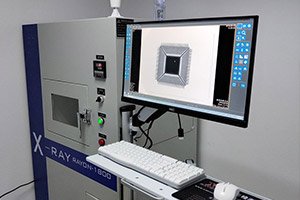
Control and communication boards may use BGA, QFN, LGA, and other high-density packages whose solder joints cannot be fully evaluated from the outside.
For these assemblies, solder-paste inspection, AOI, X-ray, and electrical or functional testing can be combined according to package type, board complexity, and customer quality requirements.
04 ·Long Product Lifecycles and Revision Control
Medical equipment may remain in production and field service for many years.
During that time, components become obsolete, firmware changes, approved alternates are introduced, PCB revisions evolve, and test procedures may be updated.
A long-term PCBA supplier therefore needs to manage not only today’s production lot, but also the relationship between materials, hardware versions, firmware, test records, and approved changes across repeat production.
Quality System and Production Workmanship
ISO 13485
ISO 9001
IPC-A-610 Class 2
IPC-A-610 Class 3
Certified Management Systems
- ISO 13485 — the quality management system used for medical-device manufacturing programs.
- ISO 9001 — the quality management system applied across controlled manufacturing operations.
Assembly Workmanship
SugaMed supports IPC-A-610 Class 2 and IPC-A-610 Class 3 workmanship according to the approved project requirements. The required class is agreed before production and recorded in the assembly and inspection criteria. Class 3 is not presented as the automatic level for every build.
Production Controls
- DFM and DFT review of spacing, analog and power boundaries, package risks, connectors, programmed parts, and test access.
- Manufacturer part number, approved-alternate, moisture, lot, and shelf-life checks before material release.
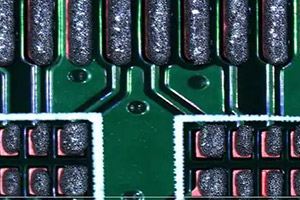
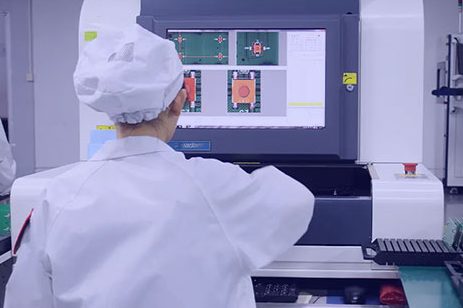
- SPI, AOI, first-article inspection, and X-Ray coverage assigned according to package and board risk.
- Hardware, BOM, programmed file, calibration data, test procedure, and serial or lot configuration control.
- Inspection, deviation, rework, programming, and customer-defined test records retained according to the project quality plan.
Customer-Defined Test Scope
Sensor-input simulation, loaded valve or relay outputs, power sequencing, alarm hardware, display controls, communication ports, programming, checksums, calibration data, and board-to-board communication may be included when the customer specifies or approves the procedure, fixture, limits, and reference equipment.
SugaMed states only the management-system certifications, workmanship levels, and production controls listed above. Finished-device certification, product registration, clinical performance, and market approval remain with the customer and are not claimed on this page.
SPI / AOI Inspection
X-Ray Inspection Where Required
First-Article and Workmanship Review
Related Medical PCB Assembly Services
SugaMed also provides PCB manufacturing and assembly services for other medical electronics applications.
Patient Monitor PCB Assembly
Manufacturing support for signal acquisition, processing, display, power, alarm, and communication electronics used in patient monitoring equipment.
Infusion Pump PCB Assembly
PCB assembly for control, motor drive, sensor interface, display, alarm, power, and communication electronics used in infusion systems.
Medical Ventilator PCB Assembly
Manufacturing support for control, pressure and flow sensing, valve and motor drive, display, alarm, power, and communication electronics used in respiratory equipment.
Learn More →
Discuss Your Hemodialysis Electronics Project
Every hemodialysis platform has its own electronic architecture, component configuration, test strategy, and quality requirements.
Send us your available PCB data, BOM, assembly documentation, and test requirements. Our engineering team will review the project and provide manufacturing feedback and a quotation based on your actual design.