
“How much does it cost to assemble one medical PCB?” sounds like a straightforward question, but it is difficult to answer with a single fixed unit price.
For a complete medical PCBA project, the quote usually includes more than SMT placement and soldering. It may also cover bare PCBs, electronic components, assembly services, inspection and testing, as well as one-time engineering costs such as stencils, programming setup, and test fixtures. Whether the project is at the prototype, low-volume, or repeat-production stage can also have a significant impact on the cost per board.
If you only have the PCB dimensions and estimated quantity, that is usually not enough to obtain a reliable quote. Gerber files, the BOM, assembly documentation, testing requirements, and project-specific quality and traceability requirements all contribute to the final cost.
To determine whether a medical PCB assembly quote is reasonable, you first need to understand what the quote includes.
Table of contents
- What Is Typically Included in Medical PCB Assembly Costs?
- What Factors Have the Biggest Impact on Medical PCB Assembly Pricing?
- Why Do Prototype, Low-Volume, and Mass-Production Unit Prices Differ So Much?
- How Is a Medical PCB Assembly Quote Typically Calculated?
- Why Do Different Suppliers Provide Such Different Quotes?
- How Can You Reduce Costs Without Sacrificing Necessary Quality?
- What Information Is Needed for an Accurate Quote?
- What Should You Look for When Comparing Medical PCB Assembly Quotes?
- Frequently Asked Questions
- How much does one medical PCB assembly typically cost?
- Do PCB assembly quotes usually include components?
- Why is the unit price for prototype PCBA so high?
- Does ISO 13485 PCB assembly always cost more?
- Does X-ray inspection increase PCB assembly costs?
- Must all medical PCBs be assembled to IPC Class 3?
- Can I get a preliminary quote with only Gerber files and a BOM?
- Request a Quote for Your Medical PCB Assembly Project

What Is Typically Included in Medical PCB Assembly Costs?
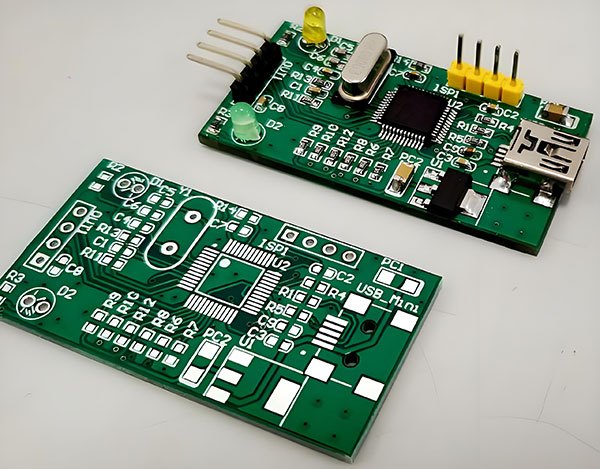
A turnkey PCB assembly project, or one that includes component sourcing, is commonly broken down into the following cost categories:
| Cost Item | What It Typically Includes | Impact on Total Cost |
|---|---|---|
| PCB Fabrication | Bare boards, materials, layer count, copper thickness, surface finish, special structures, and more | Medium to high |
| Components | ICs, passive components, connectors, and other BOM items | Often high |
| PCB Assembly | SMT, THT, and related assembly processes | Medium |
| Inspection | SPI, AOI, X-ray, and other inspection methods | Depends on requirements |
| Testing | Flying probe, ICT, FCT, and other testing methods | Depends on test coverage |
| NRE / Tooling | Stencils, programming, fixtures, and other one-time engineering preparation | Significant for low-volume builds |
One of the most common misunderstandings is this:
A PCBA quote is not just the labor cost for component placement and soldering.
In some medical electronics projects, the components themselves account for most of the total cost. Even if the PCB is small, the final PCBA price can still be high if it uses expensive MCUs, analog front ends, connectors, memory devices, or other specialized components.
What Factors Have the Biggest Impact on Medical PCB Assembly Pricing?
Production Quantity
Quantity is usually one of the first details a supplier asks about, but the relationship is not as simple as “double the quantity and cut the unit price in half.”
Before production begins, PCB assembly requires a series of preparation steps, such as engineering review, program setup, stencil fabrication, line setup, first-article verification, and test setup. Many of these tasks are required whether you build 10 boards or 500.
For prototypes and very small production runs, these fixed costs are spread across only a limited number of boards, so the unit price is often relatively high. As the quantity increases, fixed costs are distributed across more units. PCB fabrication, component purchasing, and production efficiency may also improve, which usually brings the unit price down.
This is why the unit price for the first prototype build is often higher than for repeat production.
BOM and Component Costs
For many PCBA projects, the BOM is the most important cost driver.
Two 4-layer PCBs can have very different total prices if they use different components. MCUs, ADCs, analog front ends, power-management ICs, wireless modules, connectors, and certain industrial- or medical-grade components can all carry relatively high procurement costs.
The following conditions can also increase BOM costs:
- Specified brands or manufacturer part numbers
- Long-lead-time components
- Discontinued or end-of-life components
- Minimum order quantities for low-volume purchases
- Factory packaging quantities that exceed the actual production requirement
- Components that can only be sourced through specific channels
For a prototype build of 20 or 50 boards, you may only need 50 pieces of a particular component, but the supplier may have to purchase a full reel or the supplier’s minimum package quantity. Whether the excess material is charged to the current order or retained for a future build can affect the quotation.
The more complete the BOM is, and the more clearly the manufacturer part numbers are specified, the more stable and accurate the component pricing will be.
PCB Complexity
When PCB fabrication is included in the project, the bare-board cost is also part of the total PCBA price.
A standard 4-layer FR-4 PCB and a multilayer HDI, rigid-flex, or special-material PCB can have significantly different bare-board costs, even if they use exactly the same components.
Common cost drivers include:
- PCB layer count
- Board size and panelization
- Copper thickness
- HDI / microvias
- Blind and buried vias
- Rigid-flex construction
- High-Tg or other special materials
- Surface finish
- Controlled impedance
- Special trace-width, spacing, or drilling requirements
It is important to distinguish between these two terms:
PCB fabrication cost is the cost of manufacturing the bare board, while PCB assembly cost is the cost of mounting and soldering the components.
In a one-stop PCBA quotation, these costs are often presented together. As a result, the customer typically sees the total project cost rather than a separate “placement fee.”
Component Count and Assembly Complexity
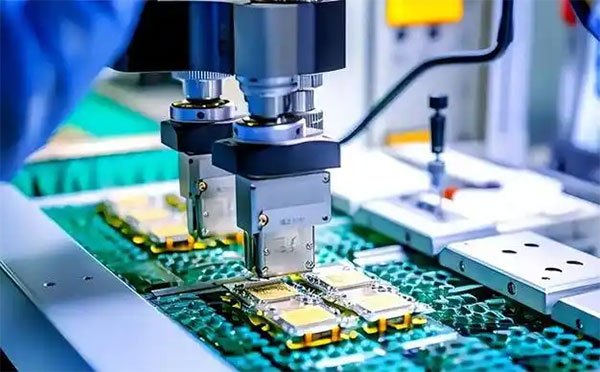
A small PCB does not necessarily cost less to assemble.
For assembly, the more important factors are often:
The number of components on the board, their package types, whether both sides require assembly, whether the design includes BGA, QFN, LGA, or fine-pitch devices, and whether manual insertion or other special assembly steps are required.
For example, a relatively small control board may contain more than 200 components, double-sided SMT, a BGA, several QFNs, and through-hole connectors. The actual assembly and inspection workload may be much higher than that of a larger board with only a few dozen simple components.
So when a customer asks:
“Why is my PCB small, but the PCBA quote is still expensive?”
The answer is usually not the board area itself. It is the amount of placement, soldering, inspection, and testing work required.
Inspection and Testing Requirements
Medical electronics projects typically require more than simply placing the components and confirming that the board powers on. Depending on the project requirements, appropriate in-process inspection and electrical testing may also be required.
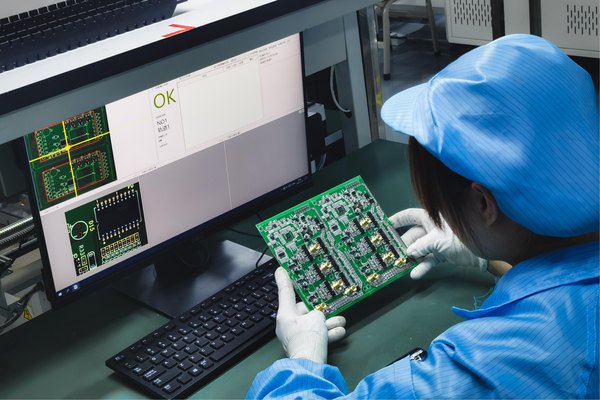
Common methods include:
| Inspection or Test Method | Primary Purpose |
|---|---|
| SPI | Checks solder paste printing |
| AOI | Checks component placement, solder joints, offsets, missing components, and other defects |
| X-ray | Inspects hidden solder joints on devices such as BGAs |
| Flying Probe | Performs electrical continuity or net-level testing |
| ICT | Tests circuit nodes using a dedicated test system |
| FCT | Performs functional testing under customer-defined conditions |
Not every medical PCBA requires all of these methods.
For example, a simple prototype without BGAs and a production board with multiple bottom-terminated packages, functional testing, and traceability records will have very different testing cost structures.
The more extensive the test scope, the more programming, fixture development, engineering time, and equipment usage may be required.
One-Time Costs for Stencils, Programming, and Test Fixtures
When comparing PCB assembly quotes for the first time, many customers focus only on the unit price and overlook NRE and tooling costs.
Common one-time charges may include:
- SMT stencil
- Programming setup
- Test program setup
- Test fixture
- ICT / FCT fixture
- Other project-specific engineering preparation
For a production order of several thousand boards, these costs may have little impact on the per-board price.
However, if you are producing only 10, 50, or 100 boards, fixed costs can represent a significant portion of the total project cost.
This is another reason why the first production run is often more expensive than repeat orders. As long as the PCB revision, BOM, test method, and process requirements remain unchanged, some one-time costs typically do not need to be incurred again for subsequent orders.
Quality, Traceability, and Documentation Requirements
The cost difference between medical projects and standard consumer electronics cannot simply be summarized as:
“Medical PCBs are always more expensive.”
The actual cost impact depends on the manufacturing and quality requirements defined for the project.
These may include:
- IPC workmanship requirements
- Lot traceability
- Component traceability
- Serial number traceability
- Manufacturing records
- Specific inspection records
- Customer-defined process controls
These requirements add work that must be performed and documented during manufacturing.
There is also a common misconception:
Not every medical PCB must be assembled to IPC Class 3.
The required workmanship class, test coverage, depth of traceability, and documentation requirements should be determined based on the customer’s specifications, the device application, and the specific project.
If suppliers use different default quality scopes when preparing their quotes, two quotes for what appear to be similar “medical PCB assembly” projects may still differ significantly.
Why Do Prototype, Low-Volume, and Mass-Production Unit Prices Differ So Much?
The same PCB project can have very different pricing at different stages of production.
| Project Stage | Typical Characteristics | Unit Cost Trend |
|---|---|---|
| Prototype | Low quantity; engineering and setup costs represent a large share of the total | Usually higher |
| Pilot / Low Volume | Fixed costs are gradually spread across more units | Begins to decrease |
| Repeat Production | Stable processes and larger purchasing volumes | Usually decreases further |
The price reduction is not simply a matter of the factory offering a “volume discount.”
As the quantity increases, panel utilization, BOM pricing, changeover efficiency, production throughput, test efficiency, and fixed-cost allocation can all improve.
For example, if the first build consists of only 20 boards, the stencil, engineering programs, and test setup all need to be created. If the design is stable and the next build consists of 500 boards, those preparations can usually be reused.
As a result, the unit cost naturally becomes much lower.
How Is a Medical PCB Assembly Quote Typically Calculated?
Assume a project requires 100 PCBAs with the following basic specifications:
- 4-layer FR-4 PCB
- Double-sided SMT
- Approximately 150 components per board
- One BGA
- PCB fabrication included
- Component sourcing included
- SMT assembly
- AOI
- BGA X-ray inspection
- Basic functional testing
A supplier will typically calculate the quote based on the actual project scope rather than providing a single “soldering price.”
| Quotation Item | Included Scope |
|---|---|
| PCB | Bare PCB fabrication |
| Components | BOM sourcing |
| Assembly | SMT and related assembly |
| Inspection | AOI + BGA X-ray |
| Testing | Functional testing |
| One-Time Cost | Stencil / programming / fixture |
If the BOM includes expensive ICs, component cost may be the largest line item.
If the components themselves are relatively inexpensive but the project requires complex FCT, programming, or a custom fixture, testing and one-time engineering costs may represent a larger share of the total.
This is why simply asking:
“How much does it cost to assemble 100 medical PCBs?”
Usually does not produce a meaningful answer.
At a minimum, the supplier needs to know what the board is, which components it uses, what assembly processes are required, and what level of inspection and testing is needed after production.
Why Do Different Suppliers Provide Such Different Quotes?
Customers often encounter the following situation:
They send the same Gerber files and BOM to three PCB assembly manufacturers and receive three significantly different quotes.
This does not necessarily mean that one supplier’s pricing is unreasonable.
More often, the three suppliers are quoting different scopes.
Different BOM Sourcing Assumptions
One supplier may calculate pricing based on factory-authorized or franchised distribution channels. Another may have the components in stock, while a third may need to purchase them according to the supplier’s MOQ.
If the manufacturer part numbers, brands, and sourcing channels are not confirmed line by line, BOM pricing can vary significantly.
Different Test Scopes
One quote may include AOI only.
Another may already include X-ray, programming, and functional testing.
The resulting unit prices will naturally be different.
If you simply compare the final dollar figures without checking what each quote includes, it is easy to reach the wrong conclusion.
Different Interpretations of the PCB Specification
Even when Gerber files are available, the material, copper thickness, surface finish, impedance requirements, or special processes may not be clearly defined. Different suppliers may then calculate pricing based on different assumptions.
This is especially important for multilayer, HDI, rigid-flex, and special-material projects, where differences in specification interpretation can directly affect the quote.
Different Ways of Presenting One-Time Costs
Some suppliers list stencils, programming, and fixtures separately under NRE.
Others spread these costs across the unit price.
Therefore, a supplier with a lower apparent unit price does not necessarily have a lower total project cost.
Different Quality and Traceability Scopes
If one quote includes more comprehensive lot traceability, component traceability, inspection records, or customer-defined process requirements while another does not, the two quotes are not actually covering the same service scope.
For medical PCBA projects, it is best to confirm that the scopes are identical before comparing total prices.
How Can You Reduce Costs Without Sacrificing Necessary Quality?
Reducing medical PCB assembly costs does not mean simply choosing the lowest-priced supplier.
A more effective approach is to eliminate unnecessary costs through design decisions, BOM optimization, production planning, and a clearly defined test strategy.
Optimize the BOM Early
During the design stage, pay attention to component lifecycle status, lead times, MOQs, and approved alternatives.
If a critical IC is already approaching end of life but this is not discovered until just before mass production, both procurement costs and project risks may increase.
For standard passive components without strict brand requirements, you can also define an approved vendor list or acceptable alternatives in advance. This helps avoid unnecessary sourcing difficulties caused by overly restrictive manufacturer part number requirements.
Conduct a DFM / DFA Review Before Design Freeze
Some assembly costs can be avoided during the design stage.
Pad design, component spacing, panelization, component orientation, through-hole component placement, and special manual assembly steps can all affect production efficiency.
Identifying these issues during the prototype or NPI stage is usually more cost-effective than correcting them after the project has entered mass production.
Plan Prototype and Low-Volume Quantities Carefully
Frequent production of very small batches often means repeatedly paying for engineering preparation, sourcing, and production setup.
If the design is relatively stable, you can plan the pilot-build quantity around the validation schedule so that one production run supports both engineering verification and subsequent testing.
However, if the project is still undergoing frequent design changes, it is not advisable to build excessive inventory simply to reduce the unit price.
The key is to match the build quantity to the current development stage.
Define the Test Scope in Advance
More testing is not always better. The test strategy should match the project objectives.
During the RFQ stage, clearly define:
Which inspections are the responsibility of the PCB assembly manufacturer, which tests will be performed at the system level, which items require dedicated fixtures, and which only require basic electrical or functional verification.
If the PCBA manufacturer and the system-level production line perform the same tests redundantly, costs may increase without providing additional value.
What Information Is Needed for an Accurate Quote?
To obtain a reasonably accurate medical PCB assembly quote, you should provide the basic manufacturing documentation.
Basic RFQ Information
- Gerber files
- BOM
- Pick-and-place / centroid file
- Assembly drawing
- Build quantity
Depending on the project, you may also need to provide:
- Programming requirements
- Testing requirements
- IPC requirements
- Traceability requirements
- Special process requirements
- Target lead time
If the project is still at an early stage and you only have the Gerber files, BOM, and estimated quantity, the supplier can usually still provide a preliminary estimate.
However, the more complete the information used for the formal production quote, the less likely the price will need to be revised later because of additional specifications or changes to the test scope.
What Should You Look for When Comparing Medical PCB Assembly Quotes?
After receiving quotes from multiple suppliers, do not compare only the final unit price.
A more practical approach is to confirm whether the following items are quoted on the same basis:
- Is PCB fabrication included?
- Are the components included?
- Is the component sourcing channel clearly defined?
- Are both SMT and THT included?
- Is AOI included?
- Is X-ray included?
- Is programming included?
- Is testing included?
- Is the fixture charged separately?
- Will NRE be charged again for repeat orders?
- Is traceability included?
- Are shipping and other additional charges included?
If the scopes are different, the unit prices are not directly comparable.
From a procurement perspective, it is more important to evaluate the total project cost, deliverables, and quality scope than to compare only the assembly price per PCBA.
Frequently Asked Questions
How much does one medical PCB assembly typically cost?
There is no single price that applies to every medical PCBA project.
A simple 2- or 4-layer PCB with a small number of components and basic AOI has a completely different cost structure from a project that includes BGAs, a complex BOM, programming, X-ray, FCT, and traceability requirements.
For a meaningful quotation, you should provide at least the Gerber files, BOM, and expected production quantity.
Do PCB assembly quotes usually include components?
Not always.
Some quotes cover assembly labor only. Others include PCB fabrication and component sourcing. Some are complete turnkey PCBA quotes.
Before comparing suppliers, confirm that their scopes are the same.
Why is the unit price for prototype PCBA so high?
Prototype quantities are small, but stencils, programming setup, engineering review, line setup, and test preparation are still required.
These fixed costs are spread across only a small number of boards, so the prototype unit cost is usually higher than the cost of later production runs.
Does ISO 13485 PCB assembly always cost more?
It is not accurate to assume that ISO 13485 automatically adds a fixed percentage to the cost of every PCB.
The actual cost impact comes from the project’s requirements for manufacturing controls, records, traceability, inspection, and testing.
Two projects may both be manufactured under an ISO 13485 quality system, but if one requires only basic assembly and AOI while the other requires more extensive traceability and functional testing, their quotes may still differ significantly.
Does X-ray inspection increase PCB assembly costs?
Yes, it adds inspection workload and related equipment time.
The actual impact depends on the types and quantities of components being inspected, the inspection coverage, and the production volume.
For devices such as BGAs, whose bottom-side solder joints cannot be directly inspected by AOI, X-ray is a common inspection method.
Must all medical PCBs be assembled to IPC Class 3?
No.
The required workmanship class should be determined based on the customer’s specifications, the device application, and the project requirements. A product’s use in medical equipment does not automatically mean that every PCB must be assembled to Class 3.
Can I get a preliminary quote with only Gerber files and a BOM?
In most cases, yes.
If you can also provide the pick-and-place file, assembly drawing, programming requirements, and testing requirements, the supplier will be better able to evaluate the complete assembly scope and provide a more accurate formal quote.
Request a Quote for Your Medical PCB Assembly Project
If your project already includes Gerber files, a BOM, pick-and-place data, an assembly drawing, the expected quantity, and testing requirements, you can organize these files and send them to a PCB assembly manufacturer for engineering review and a formal quotation.
For projects that are still in the prototype or NPI stage, you can also begin by evaluating the PCB fabrication, component sourcing, assembly, and testing costs based on the design information currently available.
Instead of asking only, “How much does one board cost?”, providing complete manufacturing documentation will usually help you receive a more useful and accurate quotation faster.
Send Your Gerber Files and BOM for a Medical PCB Assembly Quote