
PCB Assembly for Patient Monitors
Home » Patient Monitoring Device » Patient Monitor PCB Assembly
SugaMed provides medical device PCB assembly services for patient monitoring systems, including bedside, portable, modular, and wearable monitors. We support medical device OEMs from NPI prototypes and pilot builds through low-volume and repeat production.
Our services cover PCB fabrication, component sourcing, SMT and through-hole assembly, programming, inspection, customer-approved testing, and box-build integration for patient monitoring electronics.
About Patient Monitor Devices
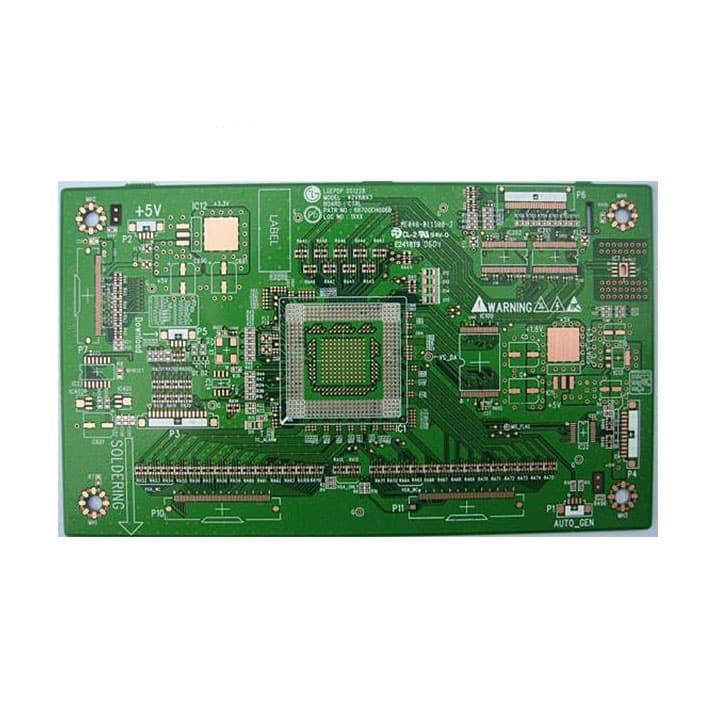
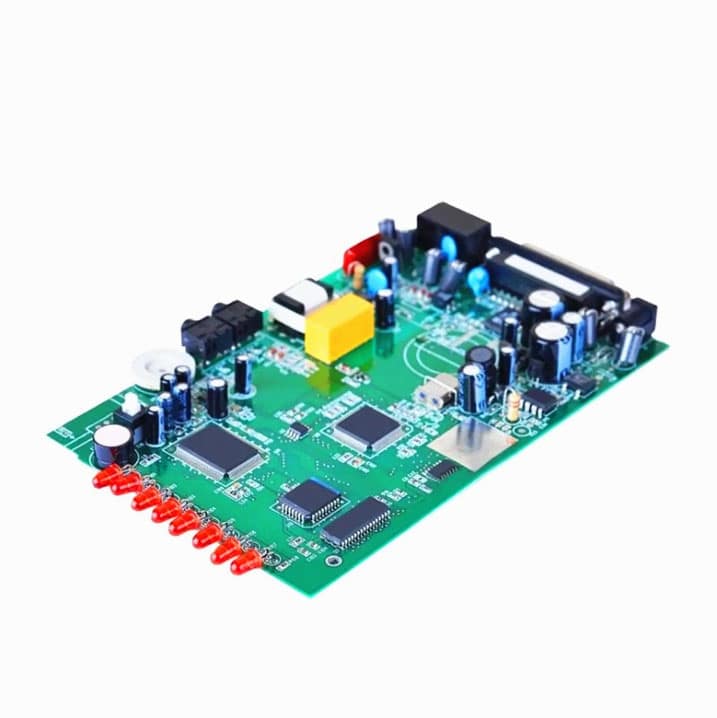
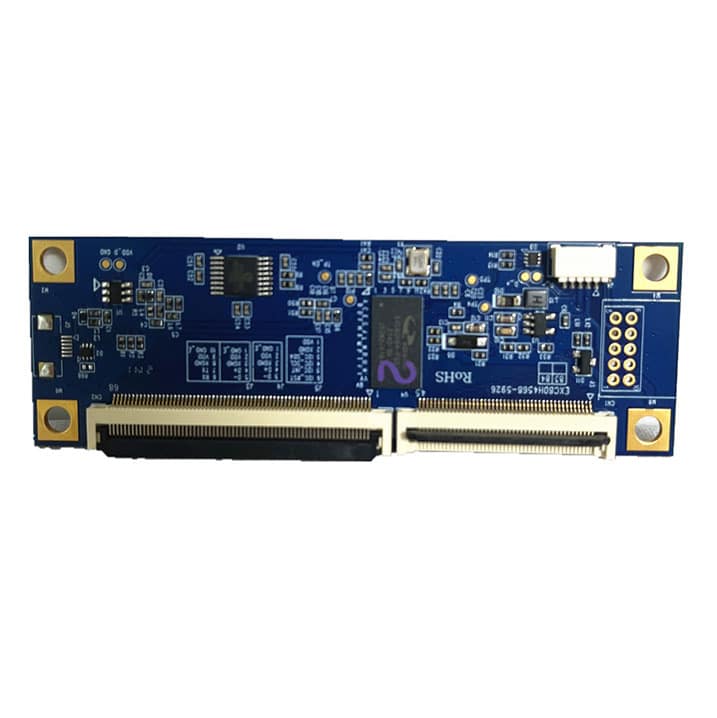
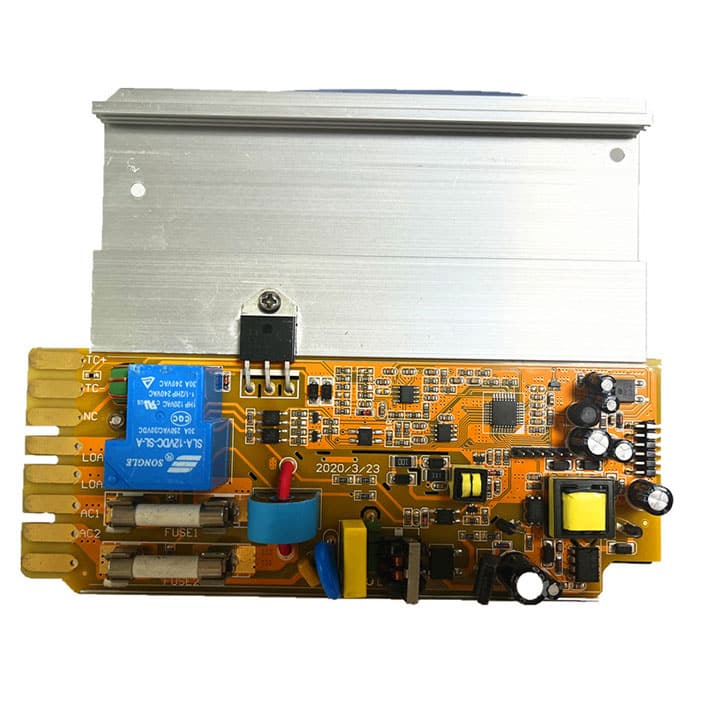
Multi-parameter patient monitors are among the most complex medical devices in the bedside electronics category. A single monitor typically integrates ECG, SpO2, non-invasive blood pressure, temperature, and respiration measurements on one mainboard, with optional EtCO2 and IBP modules for higher-acuity environments.
The PCBA inside one of these devices is rarely simple. Multiple analog measurement chains have to operate side by side without interfering with each other, an isolation barrier has to separate the patient-side circuits from the mains-side electronics, and the entire board has to hold up to years of continuous operation in clinical environments.
Patient monitor manufacturers typically work with contract assembly partners who understand these constraints — not as design experts, but as build experts who know which assembly details matter for IEC 60601-1 compliance and long-term reliability. That’s the role we fill.
Patient Monitor Applications We Support
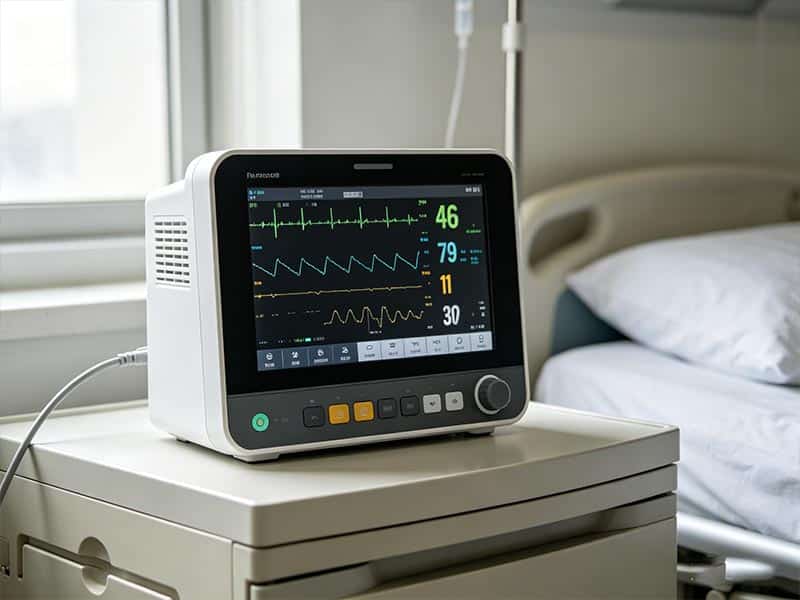
Bedside Patient Monitors
The most common form factor in hospital wards and ICUs. Typically a 10"–15" touchscreen with multi-parameter measurement, central station connectivity, and continuous power. The PCBA is usually a multi-layer mainboard plus a separate display driver board, with several rails of medical-grade isolated power.
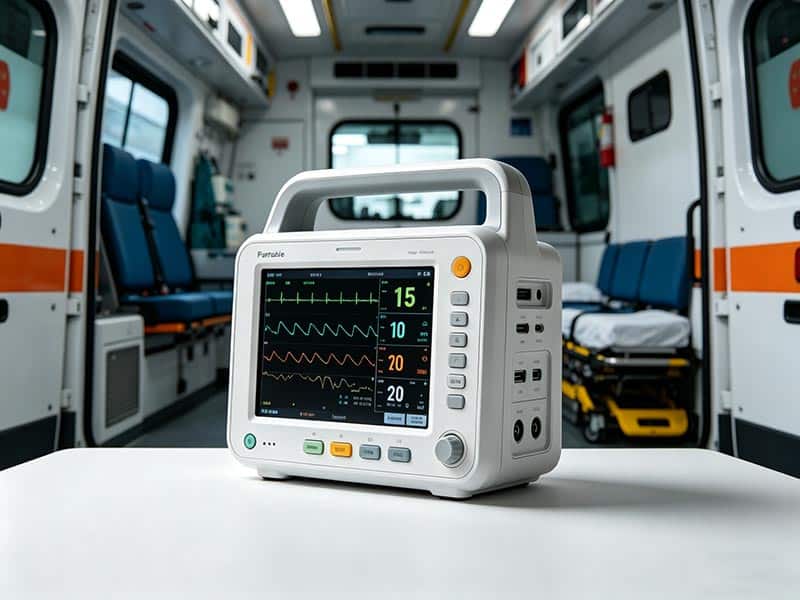
Portable & Transport Patient Monitors
Compact, battery-powered monitors used in ambulance transfer, inter-hospital transport, and emergency response. The PCBA is more space-constrained, with tighter power management and often integrated cellular or Wi-Fi telemetry. Mechanical and thermal envelopes are tighter than bedside designs.
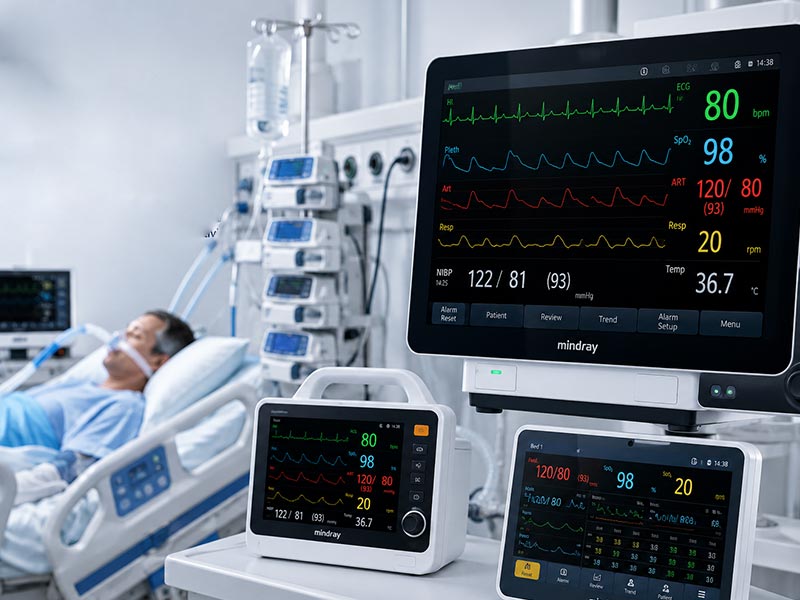
ICU & High-Acuity Patient Monitors
Higher-end monitors with extended parameter sets — adding EtCO2, IBP, cardiac output, or anesthesia gas measurement. The PCBA architecture is usually modular, with separate plug-in subsystem boards for each parameter, sharing a common backplane and isolation strategy.
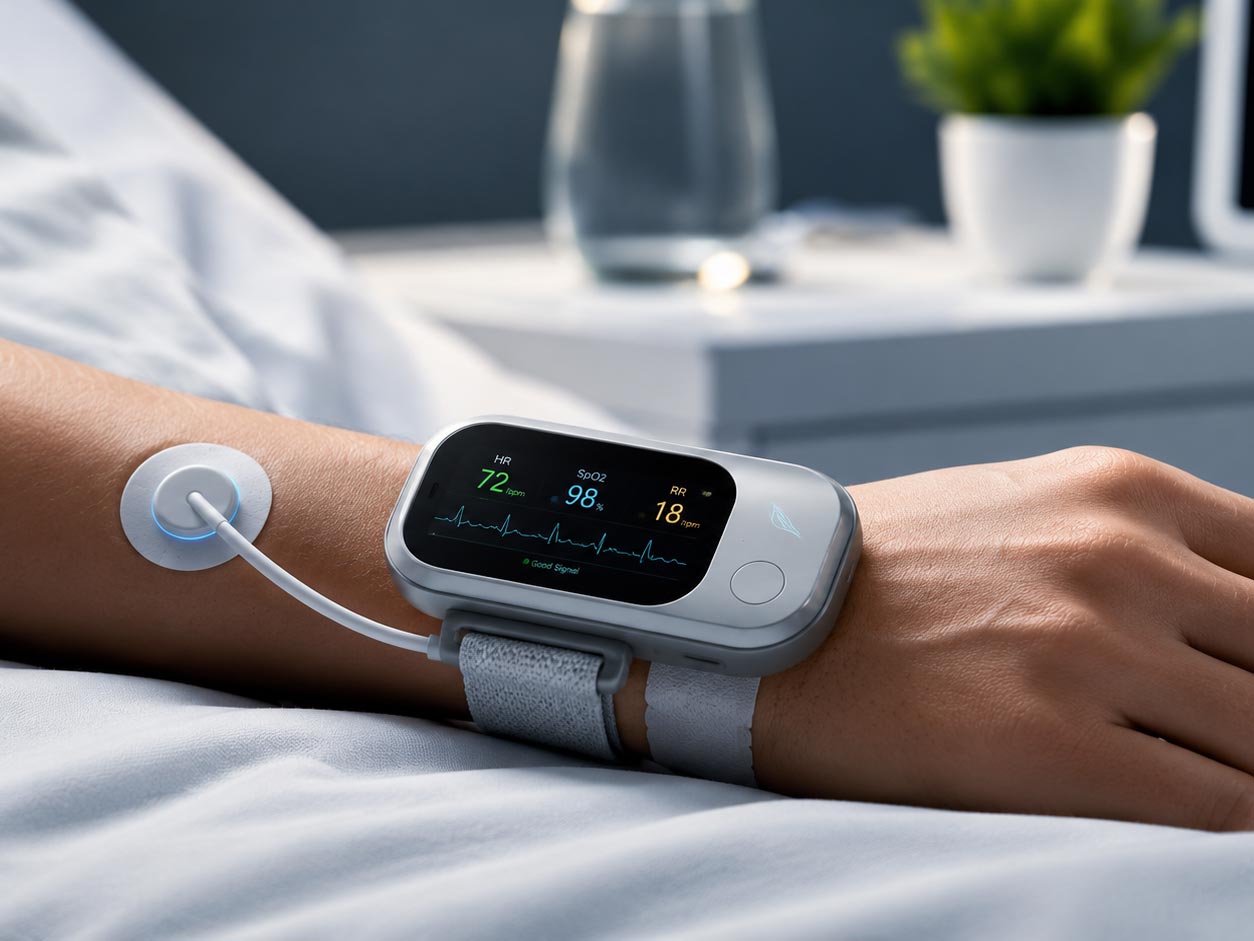
Wearable & Continuous Patient Monitors
Small, body-worn monitors that capture vital signs continuously and transmit to a smartphone or central system. PCBA tends to involve flexible or rigid-flex boards, ultra-low-power architectures, and integrated wireless modules.
Modules and Subsystems We Build for Patient Monitors
ECG / EKG Module Integration
Multi-lead ECG front-ends built around medical-grade AFEs such as the TI ADS1298 and ADI AD8232, with full Wilson central terminal implementation, right leg drive, and defibrillation protection circuitry. Supports 3-lead, 5-lead, and 12-lead architectures, with pace pulse detection and lead-off detection where the design requires it.
SpO2 Module Integration
Pulse oximetry signal chains using AFE chipsets including the AFE4490, AFE4403, and similar medical-grade analog front-ends. Layout discipline around the LED drive and photodiode return path is where most SpO2 module problems originate — and where we focus our DFM review.
NIBP Module Integration
Non-invasive blood pressure subsystems with MEMS pressure sensor conditioning, pump and valve drive circuits, and the analog signal chain required for accurate oscillometric measurement. Both home-grade and clinical-grade NIBP architectures are supported.
Temperature and Respiration Channels
Multi-channel temperature acquisition (typically NTC-based, sometimes thermopile for non-contact), and impedance-based respiration measurement derived from the ECG electrodes. These are usually the lowest-cost channels on the board, but they're often where calibration discipline shows up.
Display Driver and HMI Board
Touchscreen interface boards driving 7" to 15" medical-grade displays, with capacitive touch controllers, backlight drive, and high-speed data interface to the mainboard. We've worked with both standalone HMI boards and integrated mainboard architectures.
Patient Isolation Barrier
The single most important design region on a patient monitor mainboard. Galvanic isolation between the patient-side analog circuits and the mains-side digital circuits, built to IEC 60601-1 leakage current limits. Isolation transformers, optical isolation, and digital isolators are all part of the assembly toolkit.
Engineering Capabilities
Beyond the individual measurement modules, a patient monitor mainboard demands a few engineering disciplines that don’t apply to simpler medical electronics:
- Mixed-Signal Layout Discipline — analog and digital ground partitioning, separate analog power rails, and routing rules that prevent the digital noise from corrupting microvolt-level biopotential signals
- Multi-Layer HDI PCB Assembly — typical patient monitor mainboards run 8 to 14 layers, with controlled impedance for high-speed display interfaces and microvia structures around dense BGA packages
- Multi-Rail Power Architecture — separate isolated supplies for the patient-side, mains-side, and digital domains, often three or four independent power trees on one board
- High-Speed Display and Data Interfaces — LVDS or MIPI to the display, plus Ethernet, USB, and serial interfaces to the central station and external modules
- EMC and Immunity Compliance Build — assembly choices that preserve the IEC 60601-1-2 EMC margins designed into the schematic
What we look for during DFM review isn’t just whether the board can be built — it’s whether it will pass the IEC 60601-1 and IEC 60601-2-49 testing once it’s built into the device.
PCBA Challenges in Patient Monitor Manufacturing
Mixed-Signal Layout Verification During DFM
Patient monitor boards combine microvolt-level analog signals with digital processing on the same PCB. During DFM review, we flag layout issues that could compromise signal integrity during build — analog/digital ground partitioning, sensitive trace routing, and decoupling capacitor placement. We don't redesign the board, but we surface issues before placement, when they're still cheap to fix.
Patient Isolation Barrier Integrity
The most critical region on a patient monitor mainboard. We follow strict creepage and clearance verification, controlled placement around isolation transformers and digital isolators, and post-assembly hipot testing where the customer specifies it. IEC 60601-1 compliance starts with how the isolation region is built — and we know it.
Multi-Layer HDI Assembly
Patient monitor mainboards typically run 8 to 14 layers, with controlled impedance for high-speed display interfaces and microvia structures around dense BGA packages. Our SMT process is qualified for these board complexities, with X-Ray inspection on all BGA placements.
Component Sourcing for Medical-Grade ICs
Patient monitor designs often use specialized analog front-end ICs and isolation components with long lead times. We source exclusively from franchised distributors, with lot-level traceability records retained for the full medical-device documentation period.
Long-Lifecycle BOM Management
Patient monitors stay on the market for 8 to 12 years. We support long-running production programs with proactive end-of-life monitoring on critical components, advance notice to customers when redesign risk is approaching, and stable process documentation across the program lifetime.
Quality & Compliance
- ISO 13485 quality management system, audited annually
- FDA Class I and Class II documentation support — including DHF and DMR contributions
- IPC-A-610 Class 3 workmanship across all medical assemblies
- 100% functional testing on every patient monitoring PCBA before it ships
- Lot-level component traceability — every part traced back to authorized distributor and original manufacturer
- Counterfeit avoidance — sourcing only from franchised distributors and OEM-direct channels, no exceptions
FAQ
Do you work with early-stage patient monitor programs, or only with established OEMs?
Both. We work with companies at prototype stage and with established OEMs running multi-year production programs. The ISO 13485 quality system and documentation requirements apply across all volumes — the difference is in program scale, not in the standard of care.
How do you handle the patient isolation barrier during assembly?
We follow strict placement and inspection procedures around isolation components — isolation transformers, digital isolators, and any circuitry that straddles the patient-side and mains-side boundary. Creepage and clearance distances are verified against the design intent during DFM, and post-assembly hipot testing can be incorporated into the end-of-line test protocol where the customer specifies it.
Can you assemble boards with BGA packages and high-layer-count stackups?
Yes. Patient monitor mainboards typically run 8 to 14 layers with controlled impedance and BGA packages for the main SoC and memory. Our SMT process is qualified for these configurations, with X-Ray inspection on all BGA placements and controlled-impedance verification at the board fabrication stage.
What functional test coverage do you provide for multi-parameter mainboards?
We work with the customer to define the end-of-line functional test specification during NPI. For multi-parameter boards, this typically includes reference signal injection across the ECG, SpO2, and other analog measurement channels, as well as display interface, power rail, and communication port verification. The test specification is documented and locked as part of the production record.
How do you source analog front-end ICs like the ADS1298 or AFE4403 for medical programs?
Exclusively through franchised distributors or OEM-direct channels. Given that these components are frequently targeted by the counterfeit parts market, we do not accept inventory from non-authorized sources regardless of price or lead time. Certificates of conformance and distributor documentation are retained with every lot.
Can you take over a patient monitor program from an existing contract manufacturer?
Yes. Program transfers are a standard part of our work. The typical process involves a documentation review, process audit of the current build method, a controlled first-article build at our facility, and a qualification sign-off before full production transfer. The timeline depends on how complete the existing documentation is.
What's the lead time for a patient monitor prototype build?
Typically 10 to 15 working days from full kit receipt, for a standard multi-layer mainboard. Board complexity, BOM availability, and any open DFM items can extend this — we give a specific estimate after reviewing the design files, not a blanket promise.
Do you support box-build assembly beyond the PCBA level?
Yes — cable harnessing, sub-assembly integration, final functional testing, and medical-compliant packaging and labeling are available. Some customers use the full scope; others use only the PCBA service. Either way, the quality and traceability requirements are the same.
Related PCBA Services
Other patient monitoring device categories we build PCBA for:
Start Your Patient Monitor PCBA Program
If you’re evaluating contract assembly partners for a patient monitor program — at prototype stage, moving into first production, or considering a transfer from an existing supplier — we’re set up to give you a direct, engineering-reviewed response.