
Medical PCB & PCBA Quality System & Certifications
Home » Quality System & Certifications
Review SugaMed’s quality credentials, PCB and PCBA inspection controls, traceability, and supplier qualification support for medical electronics manufacturing.
Our current credentials include ISO 13485:2016 certification and FDA Establishment Registration, while applicable PCB and PCBA programs are manufactured and inspected to defined IPC workmanship and acceptance criteria.
- ✦ ISO 13485:2016 Certified
- ✦ IPC-A-610 Class 2 & Class 3 Supported
Quality Certification & IPC Standards
Our quality framework combines a third-party ISO 13485 quality management system certification with IPC workmanship and acceptance standards used for applicable PCB and PCBA programs.
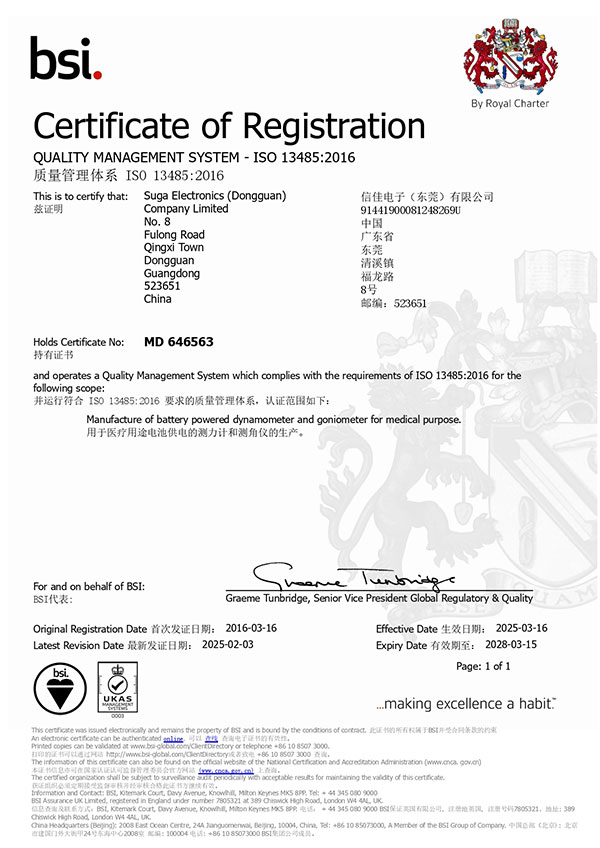
ISO 13485:2016
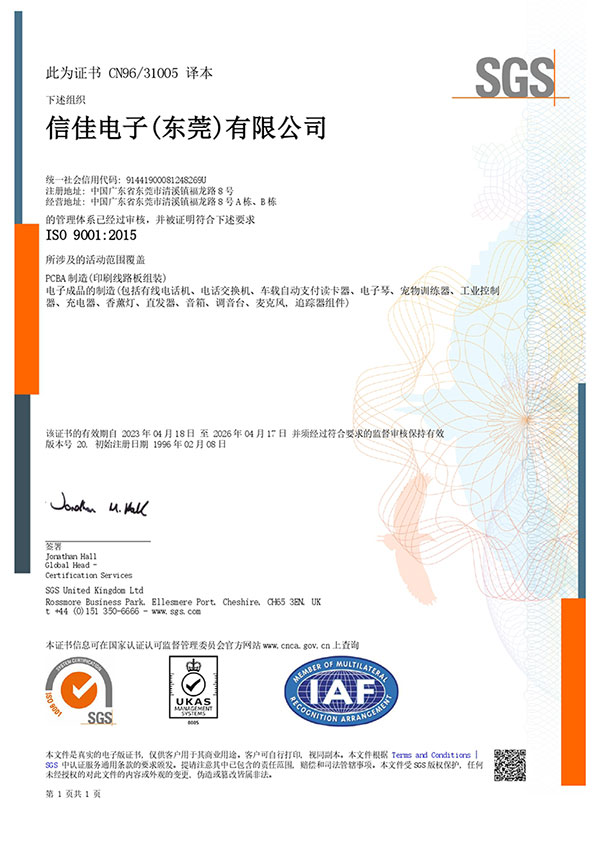
IS09001:2015
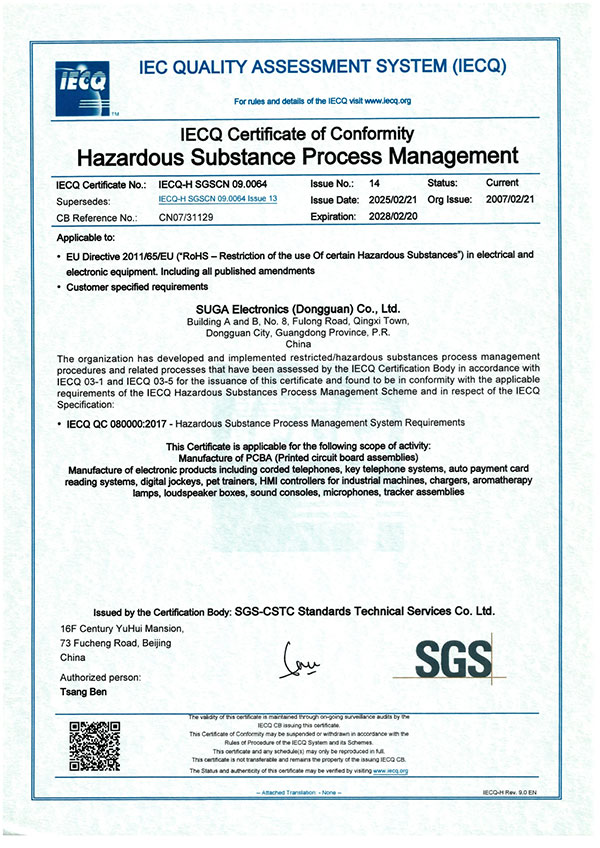
IECQ QC 080000
Certification Body: [Suga Electronics (Dongguan) Company Limited] Certificate Number: [MD 646563] Valid Through: [2028-03-15] Scope: Design support, fabrication, and assembly of printed circuit boards for use in medical devices
ISO 13485 was written specifically for organisations in the medical device supply chain — it’s not a general manufacturing quality standard applied to medical work. Holding it means our quality management system has been audited by an accredited third party against requirements that assume medical production, not just good general practice.

Registration Number: [3043149893] FEI Number: [3043149893] Registration Type: Contract Manufacturer Status: Active — renewed annually
Our registration is publicly verifiable in the FDA FURLS database — the link below opens the query system directly, so you can confirm current status without asking us for anything.
For 510(k) submissions and FDA supplier documentation requests, our registration number and FEI are directly citable. The registration is renewed every year and kept current as an ongoing obligation, not filed once and forgotten.
IPC Workmanship & Acceptance Standards
IPC standards define the workmanship, soldering, fabrication, and acceptance criteria applied to applicable PCB and PCBA projects.
| Area | Standard |
|---|---|
| Printed Board Acceptance | IPC-A-600 |
| Rigid PCB Performance | IPC-6012 |
| Electronic Assembly | IPC-A-610 |
| Soldered Assemblies | J-STD-001 |
Our inspection team includes IPC-A-610 CIS-certified personnel.
IPC Class 2 and Class 3
Unless otherwise specified in approved project documentation, our default assembly acceptance criterion is IPC-A-610 Class 2.
Class 3 can be supported when required by the product’s intended use, reliability requirements, customer specification, risk assessment, or contractual requirements. The required class should be specified in the approved project documentation before production.
Inspection & Test Capabilities
Prototype SMT assemblies receive 100% post-reflow AOI, while 100% of BGA solder joints are inspected by X-ray. Additional inspection and testing are applied according to the requirements of each project.
Automated Optical Inspection (AOI)
100% post-reflow AOI for prototype SMT assemblies
AOI checks component presence, placement, polarity, alignment, and visible solder conditions. Inspection coverage for other production programs is defined according to the applicable manufacturing and quality plan.
3D Solder Paste Inspection (SPI)
Solder paste inspection for applicable SMT programs
3D SPI evaluates solder paste height, volume, area, and positional offset after printing. Our SPI capability supports measurement ranges up to 450 μm.
X-Ray Inspection
100% X-ray inspection of BGA solder joints
X-ray inspection is used to evaluate solder connections hidden beneath component packages. BGA solder joints receive 100% X-ray inspection, while QFN, LGA, and other bottom-terminated packages are inspected according to package characteristics and project requirements.
Bare-Board Electrical Testing
Electrical verification before PCB assembly
Bare PCBs are electrically tested using flying probe or fixture-based methods as appropriate to the board design and production volume, helping identify opens and shorts before assembly.
In-Circuit & Functional Testing
ICT and FCT based on project requirements
ICT can be used for circuit-level electrical verification where suitable test access is available. FCT verifies defined board functions against customer-approved test procedures and acceptance criteria.
ATE & Burn-In Testing
Additional testing available when required
Automated test equipment (ATE), burn-in, and aging tests can be incorporated when required by the product, reliability plan, or customer test specification.
Supplier Qualification & On-Site Audit Support
Supplier qualification audits are a standard part of how medical device OEMs manage their supply chain — not an unusual request. We keep the documentation current so that when an audit comes up, we’re not scrambling to prepare for it.
What we can provide:
☑ Quality Manual and relevant procedures — available for review under NDA ☑ ISO 13485 certificate and FDA Registration documentation ☑ Representative quality record samples from fabrication and assembly production ☑ Completed supplier qualification questionnaires — standard formats or your own template ☑ On-site facility audit support — scheduling available on request ☑ First-article documentation packages for qualification builds
On-site audits
We welcome customer audits at our facility. Production floor access, quality records, and direct time with our quality and engineering teams are available by appointment. If your qualification process requires a visit, contact us to arrange timing — we don't treat facility audits as a significant logistical event. [Schedule a Facility Visit →]
Ready to get started on your project?
Whether you’re evaluating us for a new project or transitioning from another supplier — the starting point is a direct conversation with our engineering team.
Discuss Your Project
Share your board complexity, volumes, and regulatory requirements. We'll give you a clear picture of what we can do and what the timeline looks like.
Schedule a Facility Visit
On-site visits to our Dongguan facility can be arranged — production floor access, quality system review, and time with engineering team leads.