
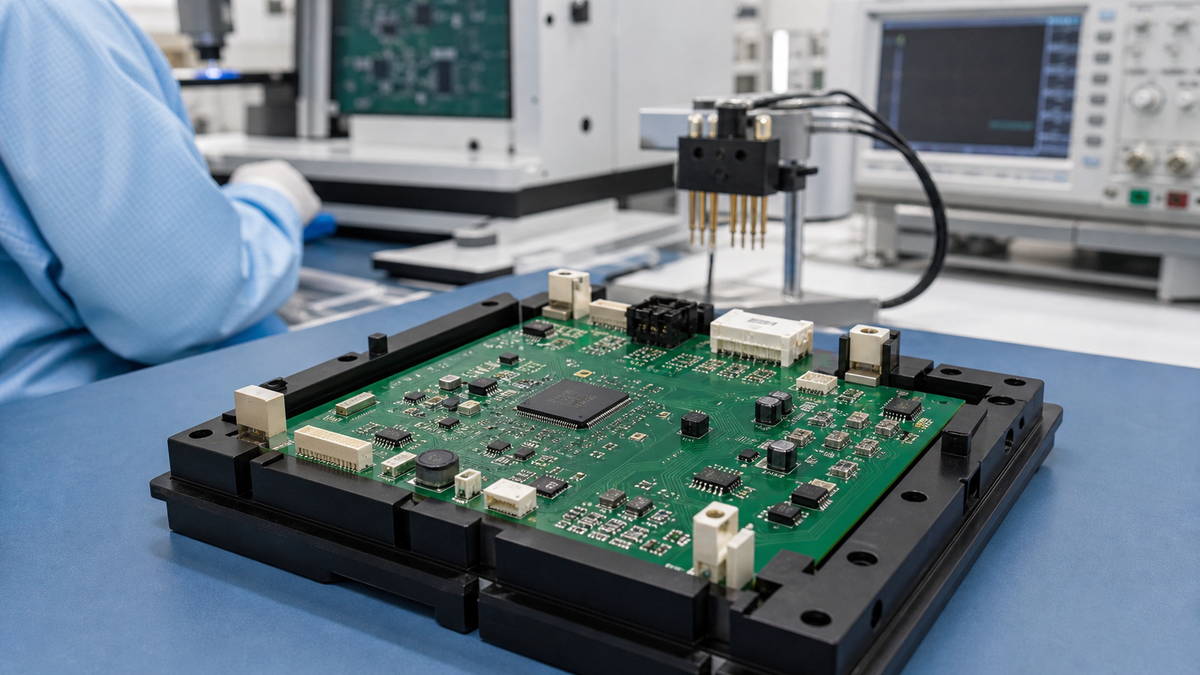
Blood Pressure Monitor PCB Assembly
Home » Patient Monitoring Device » Blood Pressure Monitor PCB Assembly
SugaMed provides full-turnkey PCB assembly for upper-arm, wrist, ambulatory, clinical, and wearable blood pressure monitors. We support medical device OEMs from NPI prototypes and pilot builds to low-volume and repeat production.
Our services cover PCB fabrication, component sourcing, SMT and through-hole assembly, programming, inspection, customer-approved testing, and box-build integration for NIBP devices and electronic sphygmomanometers.
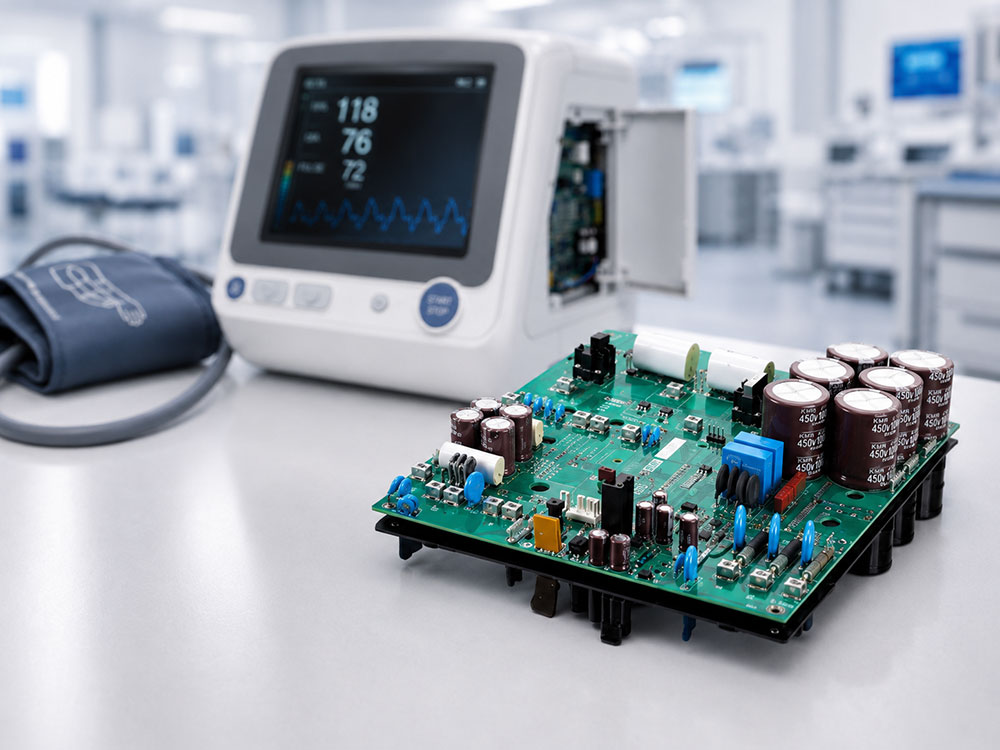
What Is Blood Pressure Monitor PCB Assembly?
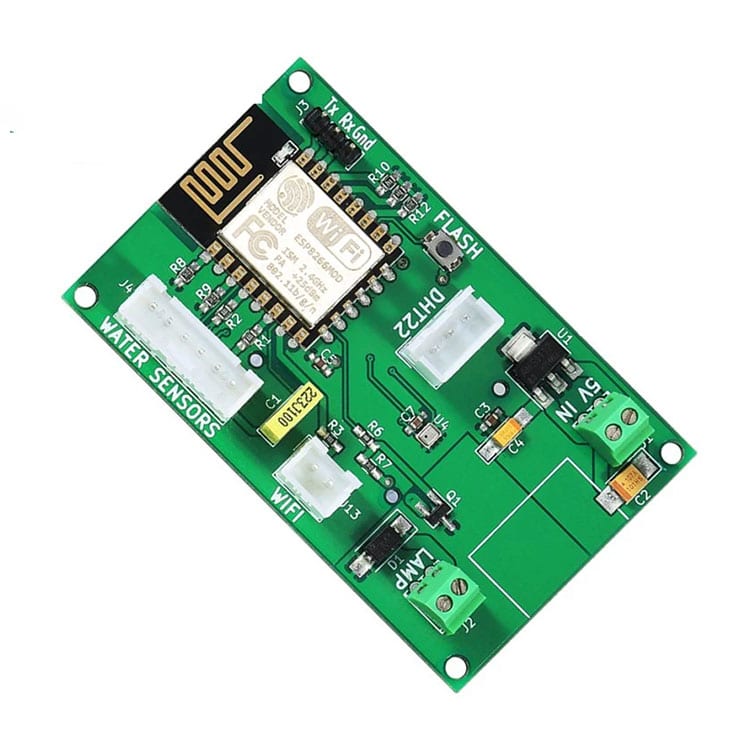
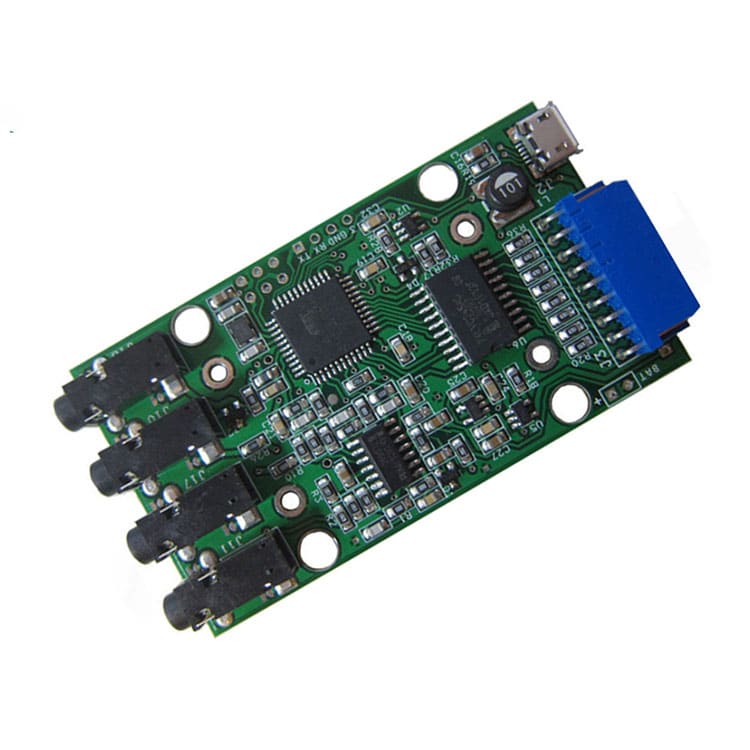
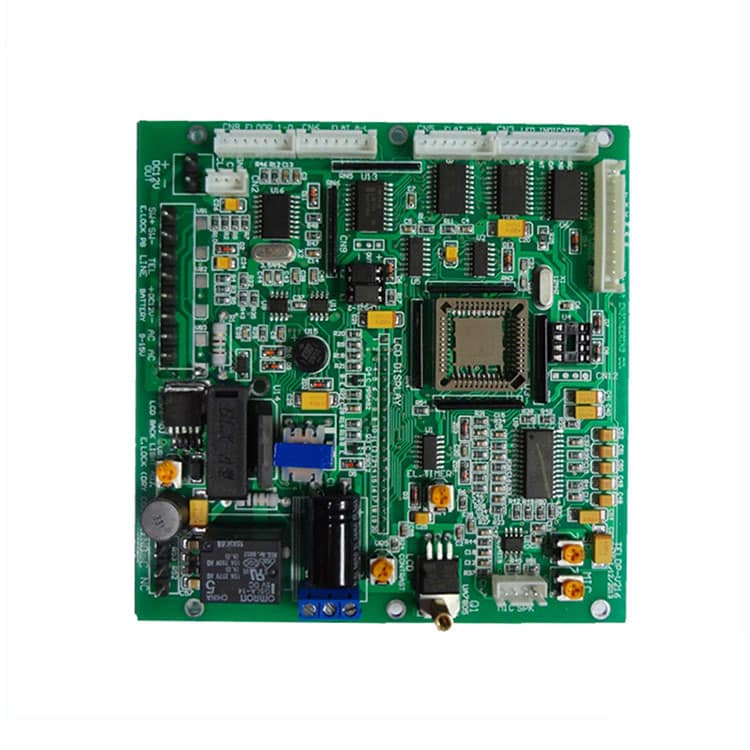
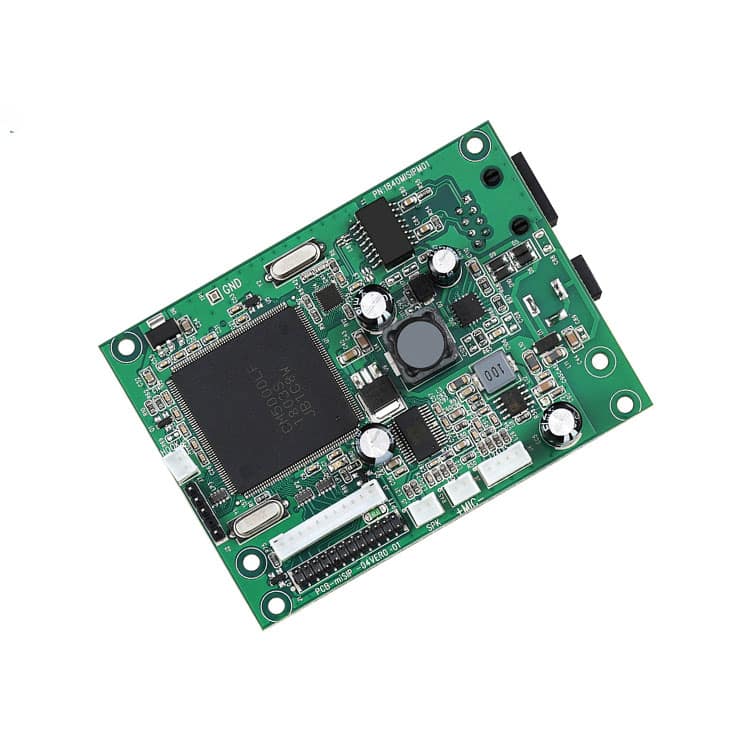
Blood pressure monitor PCB assembly refers to the manufacturing of PCB assemblies used in non-invasive blood pressure monitoring devices, also known as NIBP monitors or electronic sphygmomanometers.
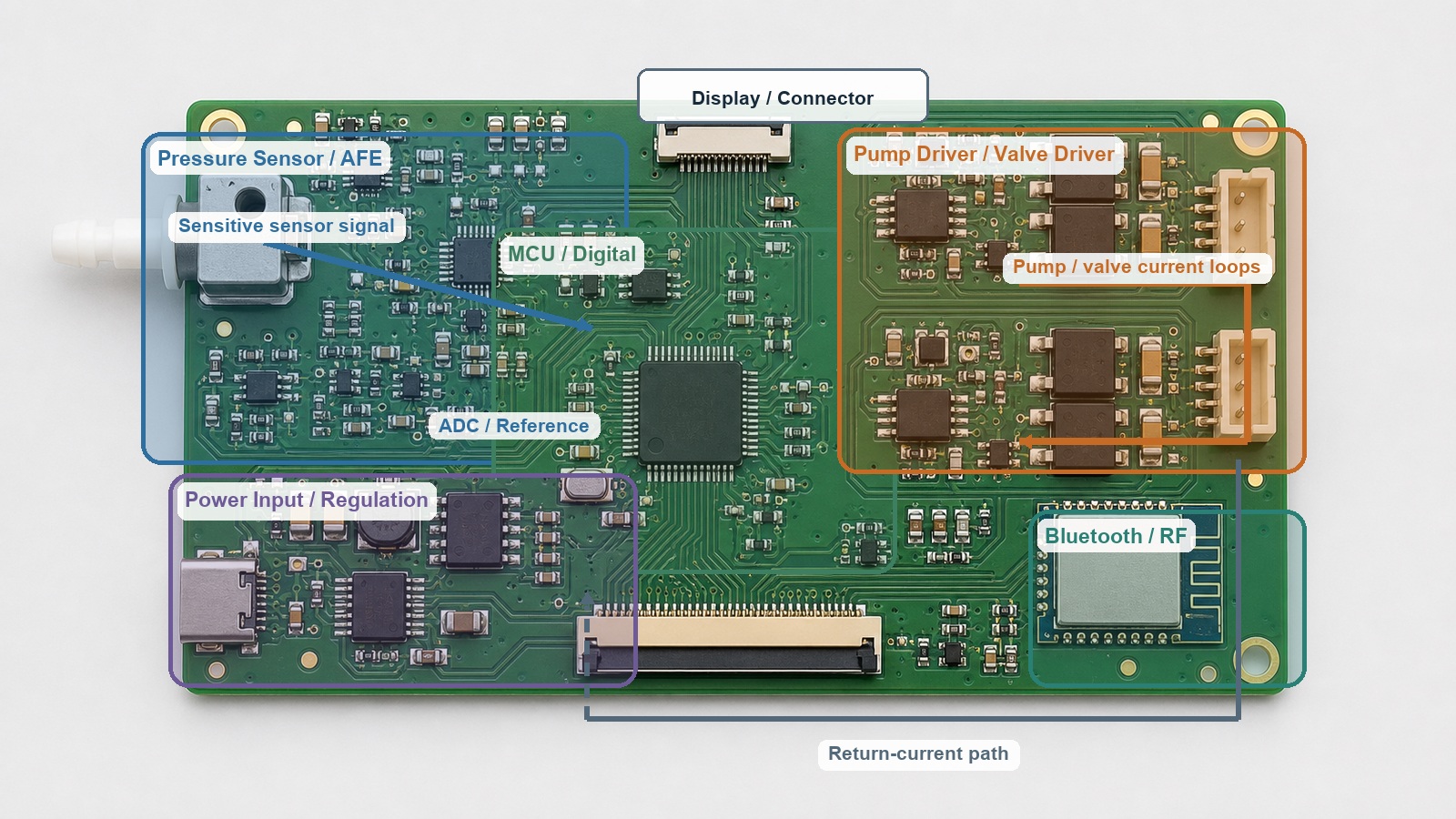
These assemblies may combine a pressure-sensor interface, analog signal acquisition, pump and valve drivers, system control, power management, display, memory, alarm, and communication circuits. Depending on the product architecture, these functions may be integrated on one main board or divided between several connected assemblies.
SugaMed manufactures PCB assemblies for blood pressure monitoring electronics under an ISO 13485 quality system. Assembly workmanship follows IPC-A-610 Class 2 or Class 3 according to the approved project requirements.
Blood Pressure Monitor Types We Support
Blood pressure monitors use different PCB structures depending on product size, power source, communication functions, measurement architecture, and intended operating environment.
The examples below describe common configurations rather than fixed design requirements. Final layer count, board material, surface finish, and assembly process follow the customer’s released design.

| Device type | Common PCB construction | Typical electronics | Manufacturing focus |
|---|---|---|---|
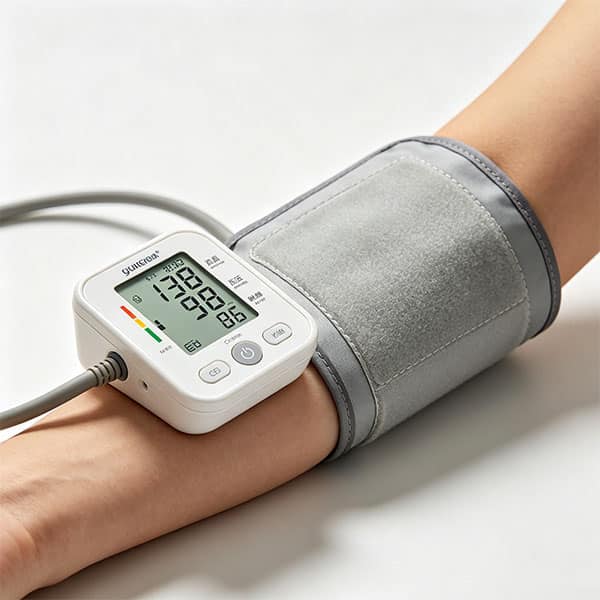
| Upper-arm blood pressure monitor | Commonly a 4-layer rigid PCB | Pressure sensing, pump and valve drive, display, memory, power, and optional communication | Sensitive signal areas, driver solder joints, connector alignment, and test access |
| Wrist blood pressure monitor | 4-layer rigid or HDI, depending on size | Compact sensor interface, power management, display, and optional Bluetooth | Fine-pitch assembly, compact placement, battery connections, and coating requirements |
| Ambulatory blood pressure monitor | Often 4–6 layers | Pressure sensing, pump control, battery management, data logging, and communication | Low-power operation, programmed files, connector reliability, and repeated measurement cycles |
| Wearable or cuffless monitor | Rigid, flex, or rigid-flex according to the design | Multiple sensor interfaces, wireless communication, charging, and compact power circuits | Fine-pitch components, flex handling, board support, and moisture-related controls |
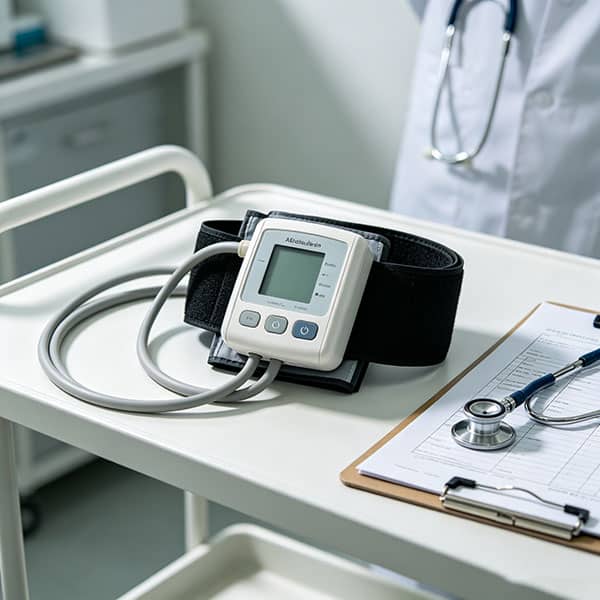
| Clinical or office monitor | Commonly 4–6 layers | NIBP control, display, communication, power, and optional parameter interfaces | Multi-board integration, cable connections, functional testing, and revision compatibility |
Four-layer construction is common when the design requires continuous ground planes and better separation between sensitive analog signals and pump-driver circuits. It is not a universal minimum. Simpler products may use fewer layers, while compact or feature-rich devices may require six-layer, HDI, flex, or rigid-flex structures.
Surface finish and laminate selection are also project-specific. ENIG, lead-free HASL, High-Tg FR-4, and other materials may be used when specified by the approved PCB design and material list.
Key Manufacturing Considerations
01 · Pressure-Sensor Handling and Soldering
MEMS pressure sensors may have package-specific storage, moisture-sensitivity, floor-life, and reflow requirements. Excess moisture exposure or an unsuitable thermal profile can damage the package or reduce assembly reliability.
Before production, SugaMed reviews the approved sensor part number, package, storage condition, orientation, land pattern, and manufacturer reflow requirements. Dry storage or baking is used when required by the applicable component instructions.
02 ·Pump and Valve Driver Assembly
The pump, solenoid valve, relay, or motor-driver section may carry considerably more current than the pressure-sensor and analog measurement circuits.
Incorrect flyback-component orientation, poor high-current solder joints, hidden thermal-pad defects, connector resistance, or an unauthorized substitute can cause the driver to overheat, reset, or fail under load even when it passes an unloaded power-on check.
SPI and AOI are used to inspect solder-paste application, component placement, polarity, and visible solder conditions. X-Ray or targeted inspection can be assigned where the package hides a thermal or power connection.
03 ·Sensitive Signal Areas
Pressure-sensor outputs and ADC reference circuits can be affected by incorrect component values, contamination, solder residue, polarity errors, or assembly variation.
During DFM and DFT review, SugaMed identifies manufacturing and testability concerns around sensitive analog areas, driver sections, component orientation, solderability, cleaning requirements, connector placement, and test access.
This review does not replace the customer’s circuit design verification, EMC evaluation, calibration process, or finished-device validation.
04 ·Hardware, Firmware, and Calibration Data
A correctly assembled board may still produce invalid readings if the hardware revision, BOM option, firmware image, calibration data, pressure sensor, or test procedure does not match the intended product configuration.
The released manufacturing package can link PCB data, BOM revisions, assembly drawings, programmed files, checksums, approved calibration data, and test procedures to the applicable build.
Programming results and serial or lot information may be recorded before customer-approved functional testing or box-build integration.
Engineering Capabilities for BPM Production
A few capabilities we apply specifically to blood pressure monitor work:
Analog–digital ground partitioning review. When customers send us a design, the first review pass is almost always about whether the analog return paths and the pump-driver return paths share copper they shouldn’t. We send written feedback before tooling.
High-Tg laminate stocking. We keep medical-grade high-Tg FR4 from a small set of approved suppliers (Shengyi S1141, ITEQ IT-180A, and a couple of others depending on the customer’s qualification list). Material substitutions are a common cause of long-term calibration drift, so we don’t make them quietly.
Conformal coating and selective potting. Required for wrist devices, ambulatory devices, and any form factor that will see contact with skin or moisture. We do selective coating around connectors and test points — uniform coating across the whole board is a common shortcut that creates problems later.
MEMS sensor SMT process. Pressure sensors are MSL-3 or MSL-4 components in most cases. We track moisture exposure, dry-bake when necessary, and run a reflow profile that’s been verified against the specific sensor’s datasheet — not a generic profile.
These aren’t theoretical capabilities. They’re the things that go wrong on BPM programs when a non-specialist factory takes the project, and they’re the reason customers come to us after their first one didn’t go well.
Process and Quality Control
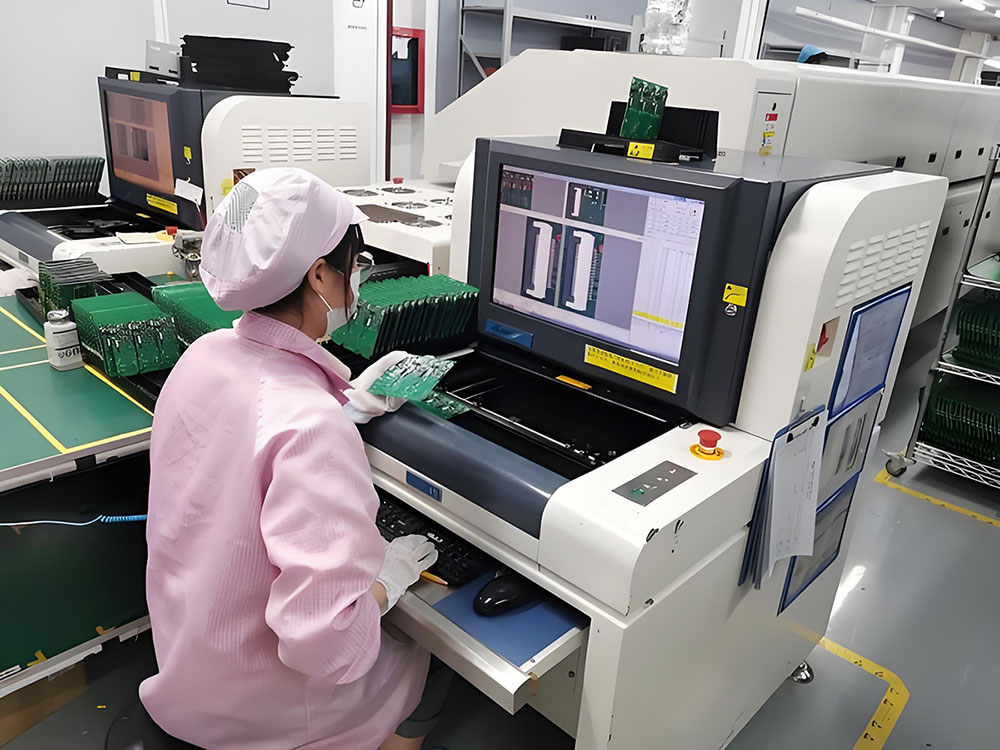
Each blood pressure monitor PCBA build follows a four-stage quality process, including controls for pressure-sensor handling and functional verification. Incoming inspection covers approved sourcing, component authenticity, MEMS sensor moisture sensitivity and shelf life, and PCB laminate lot confirmation. Sensor storage, floor life, and reflow requirements are checked before production.
During SMT assembly, SPI and AOI inspect solder paste, placement, polarity, and visible solder conditions, while X-Ray is used for hidden joints where required. The MEMS sensor reflow profile is reviewed separately because moisture or thermal-profile errors may damage the package without creating an obvious visual defect.
When the required fixture, firmware, test procedure, and acceptance limits are available, functional testing may include simulated inflation and deflation, ADC sampling, pump and valve operation, and checks for driver-related noise in the pressure signal path.
Final verification covers component and PCB lot traceability, programming records, inspection results, and customer-approved test data according to the project quality plan.
FAQ
What PCB layer count is recommended for a digital blood pressure monitor?
Four layers is the practical minimum for any serious BPM design. The reason is the analog–digital ground partitioning — two-layer boards force compromises in ground plane integrity that show up later as accuracy drift. Wearable and ambulatory designs often go to six layers when the form factor demands it.
Which MEMS pressure sensors do you have experience assembling?
We’ve worked with sensors from Honeywell (ABP and HSC families), TE Connectivity, Omron’s 2SMPB series, and several others depending on customer specification. The brand matters less than the MSL handling — pressure sensors are moisture-sensitive parts and require careful handling on the line.
How do you ensure pump-driver noise doesn't affect pressure signal accuracy?
Through layout review during DFM (we flag analog-digital ground sharing before tooling), through manufacturing process discipline on the H-bridge driver area, and through the functional test stage that simulates real inflation-deflation cycles to verify clean ADC sampling.
Do you support compliance documentation for IEC 80601-2-30?
Yes. We provide the manufacturing-side documentation that goes into a customer’s regulatory submission against IEC 80601-2-30. We don’t write the submission itself, but we make sure the manufacturing record is audit-ready.
Can you assemble PCBA for both upper-arm and wrist blood pressure monitors?
Yes, and the table earlier on this page lists the form factors we build for. The manufacturing approach differs significantly between the two — we don’t apply a single process across the board.
What's your typical lead time for BPM PCBA prototypes and production?
Prototypes ship in 7 to 10 working days. Production typically runs on a 4-to-6 week cycle once tooling is qualified, though this depends on BOM complexity and the lead times of the specific medical-grade components.
Related Articles
Explore practical engineering topics covering blood pressure monitor circuits, PCB layout, pressure sensing, pump and valve control, and PCBA testing.
Start Your Blood Pressure Monitor PCBA Project
Upload your design files and BOM, and our engineering team will return a quote with DFM feedback within 24 hours. Whether you’re prototyping a new wearable BPM or transferring an existing upper-arm device from another supplier, we’ve handled the transition before.