
BGA Assembly Services
Precision BGA PCB assembly for medical and high-reliability electronics, with fine-pitch placement, controlled reflow, and X-ray inspection for hidden solder joints.
SugaMed provides BGA assembly at our Dongguan, China manufacturing facility, supporting engineering prototypes through low-volume and repeat production. Projects are managed under an ISO 13485 quality system with controlled component sourcing, assembly, inspection, and testing requirements.
BGA Assembly Capabilities
SugaMed supports fine-pitch BGA assembly with controlled placement, reflow, and X-ray inspection. Our SMT lines support the following BGA assembly capabilities.
0.35 mm
BGA Pitch Capability
Supports BGA packages with pin pitches as fine as 0.35 mm.
±0.025 mm
IC Placement Accuracy
Our SMT placement capability includes IC placement accuracy of ±0.025 mm for fine-pitch package assembly.
45 × 45 mm
Confirmed IC Package Size
Support IC packages up to 45 × 45 mm for SMT assembly.
15 SMT Lines
Dongguan, China
Our China manufacturing facility operates 15 SMT lines using Fuji and Yamaha placement equipment.
20+ Heating Zones
Controlled Reflow
Our reflow systems use 20+ heating zones with temperature-control accuracy of ±1°C.
X-Ray Inspection
BGA Solder Joints
100% X-ray inspection is performed for BGA solder joints after assembly.
SugaMed also supports double-sided SMT assembly, mixed SMT and through-hole assembly, flex PCBA, and rigid-flex PCBA, subject to project review.
BGA PCB Assembly Process
Before placement, we review the BGA package, PCB footprint, stencil requirements, and assembly conditions.
The engineering team reviews the available PCB data, BOM, BGA part numbers, placement information, assembly drawings, and inspection or test requirements.
For fine-pitch BGA assemblies, the review also considers the footprint, pad design, package location, surrounding components, and other conditions that may affect manufacturability.
02 Solder Paste Printing and SPI
Solder paste is printed onto the PCB pads through a controlled stencil-printing process.
3D solder paste inspection evaluates deposit position, height, area, and volume before component placement. Detecting printing variation at this stage helps prevent solder-related issues from becoming hidden beneath the BGA package after reflow.
03 Precision BGA Placement
BGA packages are placed using automated SMT equipment with IC placement accuracy down to ±0.025 mm.
Placement settings are established according to package pitch, dimensions, PCB pad geometry, and board layout.
04 Controlled Reflow
The assembled PCB passes through a controlled multi-zone reflow process.
The required thermal profile is established according to PCB construction, component population, package characteristics, solder materials, and project requirements rather than applying one fixed profile to every BGA assembly.
05 Post-Reflow Inspection
Visible component-placement and soldering conditions are inspected after reflow.
AOI is effective for visible SMT conditions, but BGA solder joints are located beneath the package and cannot be fully evaluated optically.
06 BGA X-Ray Inspection
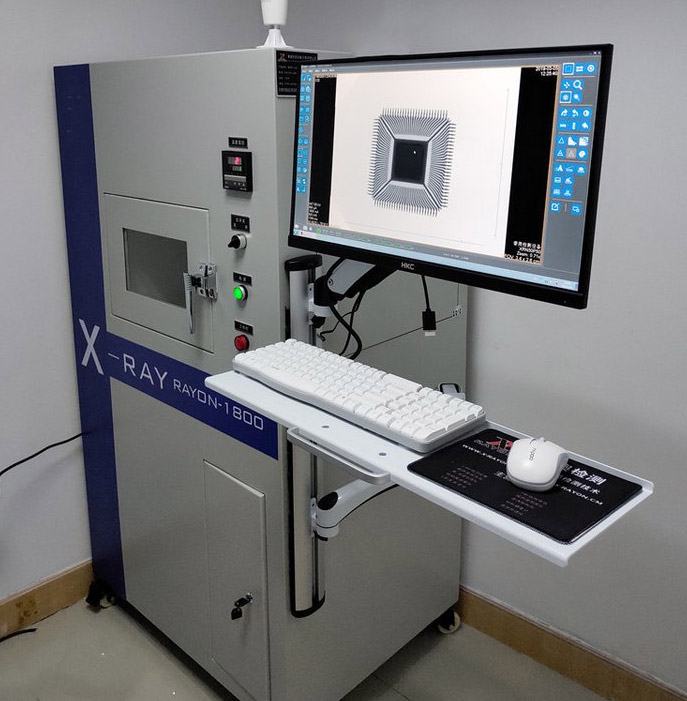
After reflow, BGA assemblies proceed to X-ray inspection to evaluate hidden solder-joint conditions that cannot be fully assessed by visual inspection or AOI.
Inspection results are reviewed before the assemblies move to any agreed electrical or functional testing and final inspection.
07 Electrical and Functional Testing
Testing requirements are defined according to the PCB design, available test points, project stage, fixtures, test procedures, and customer acceptance criteria.
Electrical checks, functional testing, or other agreed test methods can be incorporated according to project requirements.
Why BGA Assembly Requires Precise Process Control
BGA solder joints are located underneath the package rather than around its perimeter. As pitch decreases, the assembly process becomes more sensitive to solder paste deposition, component alignment, thermal behavior, and PCB conditions.
Fine-Pitch Placement
Fine-pitch BGA packages provide less margin for printing and placement variation.
For 0.35 mm pitch BGA assembly, stable solder paste printing, accurate component placement, and controlled reflow become particularly important.
Hidden Solder Joints
Unlike gull-wing or other externally visible leads, BGA solder joints cannot be fully inspected after reflow using visual inspection or AOI alone.
X-ray inspection is therefore an important part of evaluating the finished BGA assembly.
Reflow and Warpage
The PCB and BGA package both respond to temperature during reflow.
PCB construction, copper distribution, package geometry, thermal mass, and the selected reflow profile can influence solder-joint formation. These factors should be considered during process setup rather than treating every BGA package in the same way.
Voiding and Joint Consistency
Voiding can occur within BGA solder joints, but the presence of a void alone does not automatically determine whether a joint is acceptable.
X-ray findings are evaluated against the applicable workmanship criteria, package characteristics, and approved project requirements rather than applying one universal void percentage to every BGA assembly.
Inspection for BGA Solder Joints
Because BGA solder joints are hidden beneath the component body, visual inspection alone cannot provide adequate visibility of the completed joints.
SugaMed performs 100% X-ray inspection for BGA solder joints.
X-ray inspection can help identify indications such as:
- Package and solder-ball alignment
- Bridging between adjacent joints
- Open-joint indications
- Insufficient or inconsistent solder
- Solder-ball consistency
- Voiding indications
Inspection results are assessed according to the component package, applicable workmanship criteria, and approved project requirements.
QFN / LGA inspection plan
QFN, LGA, and other bottom-terminated packages are inspected according to package type, assembly risk, and the agreed inspection plan.
From BGA Prototypes to Repeat Production
BGA assembly requirements often evolve as a PCB moves from an engineering prototype to a released production configuration.
SugaMed supports BGA assembly from initial engineering builds and design revisions through low-volume and repeat production.
Prototype BGA Assembly
Prototype builds can be used to evaluate BGA manufacturability, assembly conditions, X-ray results, and electrical or functional performance before the design is released for repeat manufacturing.
Prototype builds can start from 1 unit when appropriate for the project.
Revised BGA Builds
Changes to the PCB, BOM, BGA package, footprint, or surrounding component population can affect assembly conditions.
When revisions are introduced, the updated PCB data, BOM, placement information, and applicable inspection requirements are reviewed before the next build.
Repeat Production
Before repeat production begins, the released PCB revision, approved BOM, component alternatives, workmanship criteria, inspection requirements, and test method are confirmed.
Records from prototype and engineering builds provide a useful reference during production transfer, while final production controls are established against the released project configuration.
BGA Assembly Under an ISO 13485 Quality System
ISO 13485 Quality Management System
Medical BGA projects may also require controlled material handling, inspection criteria, traceability, and project-specific testing.
SugaMed manages medical electronics assembly within an ISO 13485 quality management system.
Project and Revision Control
PCB data, BOMs, placement files, assembly requirements, test information, and approved engineering changes are managed against the applicable project revision.
If discrepancies are identified between project files, they are reviewed before production proceeds.
Component Sourcing and Material Control
Components are sourced and managed by SugaMed according to the approved BOM.
Customer-supplied or consigned components are not accepted.
If a specified component becomes unavailable and an alternative is proposed, the substitution is communicated for customer approval before purchasing or assembly.
IPC Workmanship Requirements
Medical electronics do not automatically require IPC Class 3.
The required IPC class depends on the intended use of the product, reliability requirements, risk assessment, and contractual requirements.
Some medical electronics may be assembled to IPC Class 2, while higher-reliability products may require Class 3. The required workmanship criteria should be stated in the approved project documentation.
Inspection and Test Requirements
Inspection and test requirements are controlled according to the approved project documentation.
Additional inspection and test requirements are defined according to the board design, component packages, product requirements, and approved inspection or test plan.
Certification boundary: ISO 13485 certification supports the manufacturing quality system; it does not by itself constitute regulatory approval or certification of the finished medical device.
BGA Assembly Requirements We Review
Before production, our engineering team reviews the key factors that may affect BGA assembly quality and manufacturability.
BGA type, pitch, dimensions, footprint, pad design, and ball configuration.
Board thickness, stack-up, copper distribution, and surrounding component layout.
Stencil design and solder paste requirements based on the BGA footprint and assembly conditions.
PCB construction, component population, package characteristics, and soldering requirements.
Acceptance criteria, reporting requirements, and any additional package-specific inspection needs.
Applicable electrical or functional test requirements are reviewed before production.
FAQ
Our confirmed BGA assembly capability extends down to 0.35 mm pitch.
Actual manufacturability is reviewed against the package, footprint, PCB layout, pad geometry, surrounding components, board construction, and overall assembly requirements.
Yes.
SugaMed performs 100% X-ray inspection for BGA solder joints because the joints are located underneath the package and cannot be fully evaluated by visual inspection or AOI alone.
X-ray inspection can help identify hidden conditions such as joint alignment, bridging, open-joint indications, insufficient or inconsistent solder, solder-ball consistency, and voiding indications.
Acceptance criteria depend on the package, applicable workmanship criteria, and approved project requirements.
Yes.
BGA prototype builds can start from one assembled board when appropriate for the project. Revised engineering builds and subsequent low-volume production can also be supported as the design progresses.
Yes.
After the prototype or engineering build is approved, the project can move into repeat production once the released PCB data, BOM, component substitutions, inspection requirements, workmanship criteria, and test method have been confirmed.
For an accurate quotation and engineering review, provide the available Gerber or ODB++ data, BOM, pick-and-place data, assembly drawings, BGA part numbers, quantity, and applicable inspection or test requirements.
If the complete manufacturing package is not yet available, send the project information you currently have. We can identify what additional data is required before production.
No.
The required IPC class depends on the intended use of the product, reliability requirements, risk assessment, and contractual requirements.
Some medical electronics may be assembled to IPC Class 2, while higher-reliability products may require Class 3. The required class should be stated in the approved project documentation.
SugaMed manages component sourcing according to the approved BOM.
Customer-supplied or consigned components are not accepted. If a specified component is unavailable, any proposed alternative is reviewed with the customer before purchasing or assembly begins.
BGA assembly is influenced by the entire PCB and package combination.
Pad design, solder-mask definition, via structure, PCB construction, copper distribution, component location, surrounding clearances, stencil design, and thermal behavior can all affect manufacturability and solder-joint formation.
These factors can be reviewed before production when the necessary design data is available.
Need a BGA Assembly Review?
Send your PCB files, BOM, BGA part numbers, required quantity, and inspection or test requirements.
Our team will review the project against the BGA package, PCB design, component availability, assembly complexity, inspection requirements, testing needs, and production quantity before confirming manufacturability and quotation.