
In our previous article on SMT Production Line and Process Flow, we looked at the main stages of a modern SMT line: solder paste printing, SPI, component placement, reflow soldering, AOI, X-ray inspection, and downstream testing.
Most of these processes are now highly automated.
That is why a modern SMT workshop usually does not have large groups of workers standing around every machine. On a highly automated line, the number of operators physically stationed beside the equipment may be surprisingly small.
But that does not mean an SMT factory only needs a few machine operators.
A production line can only run consistently when process engineers, equipment engineers, quality personnel, production supervisors, material teams, and operators all work together. Larger PCB assembly factories tend to divide these responsibilities into specialized roles, while smaller factories may have one engineer covering several functions.
So who actually keeps an SMT line running?
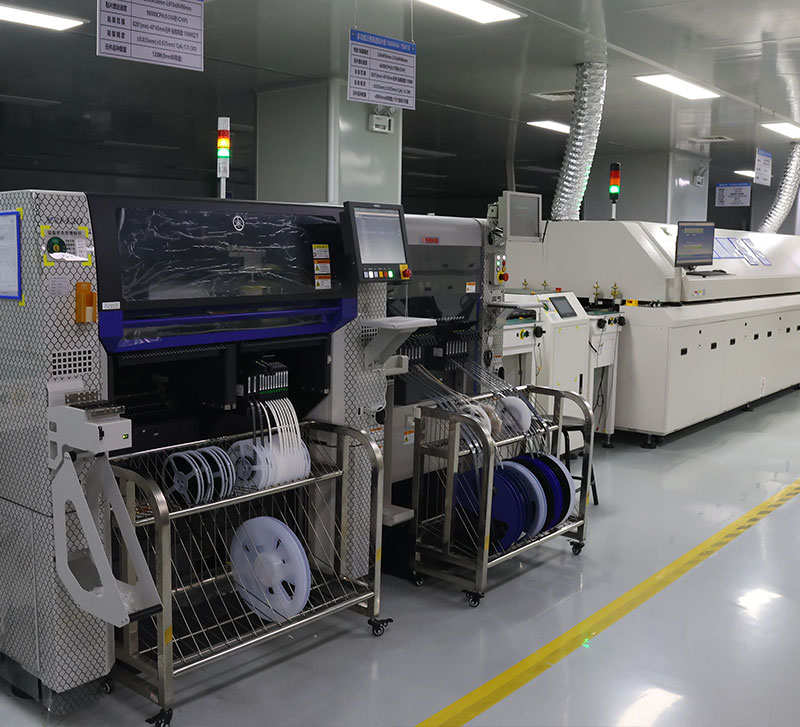
SMT Process Engineer: Deciding How the Board Should Be Built
The process engineer is one of the most important technical roles in SMT production.
Their job is not simply to make the machines run. It is to determine how a particular PCB assembly should be manufactured.
During new product introduction, this may involve reviewing stencil aperture design, setting solder paste printing parameters, checking the placement program, developing the reflow profile, and adjusting process conditions for packages such as BGA, QFN, 0201, or 01005 components.
When production starts, another part of the job begins.
Suppose the line starts showing repeated solder bridges, tombstoning, insufficient solder, or component misalignment. The obvious response is to repair the affected boards. But the more important question is why the defect appeared in the first place.
The process engineer may compare SPI, AOI, X-ray, and production data to determine whether the problem came from printing, placement, reflow, or even the PCB design itself.
In many PCB assembly factories, process engineers are also involved in reviewing Gerber files, BOMs, pick-and-place data, and assembly drawings before production begins. Catching a problem at this stage is usually much easier than dealing with it after hundreds of boards have already been assembled.
Equipment Engineer: Keeping Automation Reliable
Automation does not make equipment engineers less important. In many ways, it makes them more important.
An SMT line can run continuously at high speed, but a problem with the printer, placement machine, reflow oven, or inspection equipment can interrupt the entire line.
Take a sudden increase in component rejection on a placement machine.
The problem might come from a feeder, a worn nozzle, the vision system, or a mechanical accuracy issue. Restarting the machine may clear the alarm temporarily, but it does not necessarily solve the real problem.
That is where the equipment engineer comes in.
They are responsible for equipment installation, setup, maintenance, troubleshooting, and preventive servicing. Their goal is not just to repair a machine after it fails, but to reduce the chance of unexpected downtime in the first place.
Factories running multiple SMT lines will often have a dedicated equipment engineering team because equipment availability has a direct effect on output and delivery time.
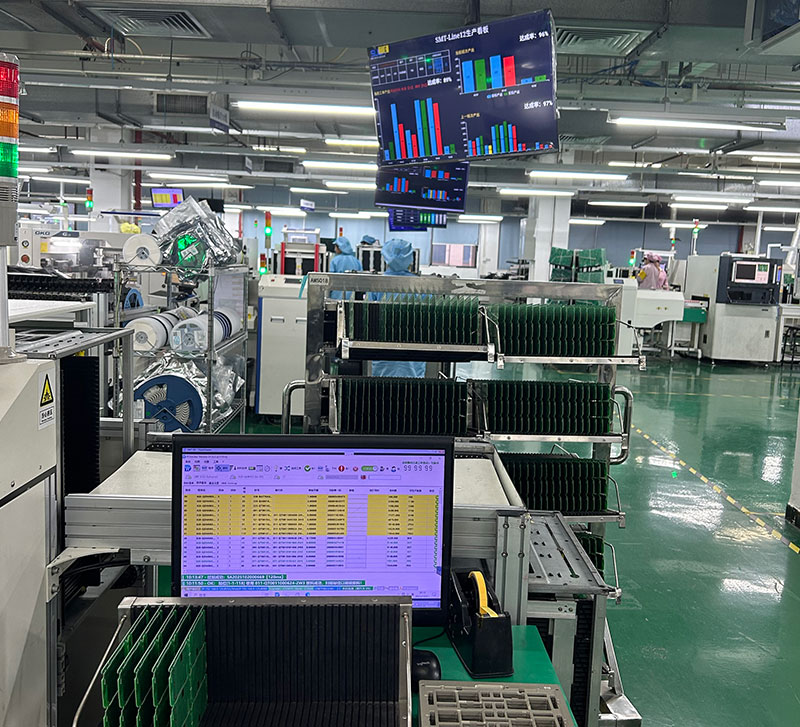
SMT Line Supervisor: Connecting Production, Engineering, and Quality
The line supervisor is the person who keeps the daily production flow organized.
Before a line starts, someone has to confirm that the materials are ready, the correct production files have been released, machine programs are loaded correctly, and first-article approval has been completed.
Once the line is running, the supervisor watches output, yield, changeover time, and equipment status.
If AOI begins finding the same soldering defect repeatedly, simply sending more boards to rework is not enough. The process engineer may need to review solder paste printing, placement accuracy, or reflow conditions.
If the placement machine starts stopping repeatedly, equipment engineering may need to get involved.
This is why the line supervisor sits between several functions. The role is less about operating one specific machine and more about keeping production, engineering, and quality moving in the same direction.
Machine Operators: The People Actually Running the Line
Even highly automated SMT lines still need operators.
How many depends on the factory and the equipment configuration.
Some factories assign separate operators to the solder paste printer, placement machines, reflow oven, and AOI system. On more automated lines, one operator may monitor several adjacent machines.
Their daily work can include loading and changing components, installing feeders, adding solder paste, checking stencil condition, responding to routine alarms, and carrying out basic equipment inspections.
Operators are not normally expected to make major process decisions.
If a simple alarm occurs, they can follow the standard operating procedure. If the problem involves placement accuracy, process settings, or a machine fault, it should be escalated.
In other words, operators keep the approved process running; engineers decide when the process itself needs to change.
Quality and Inspection Personnel: More Than Pass or Fail
Finding a defect is only one part of quality control.
The more difficult question is whether that defect is an isolated event or part of a wider process problem.
After placement and reflow, PCB assemblies may be checked using SPI, AOI, X-ray inspection, ICT, flying-probe testing, FCT, or a combination of these methods depending on the product.
AOI can identify issues such as missing components, polarity errors, placement offsets, and many visible soldering defects.
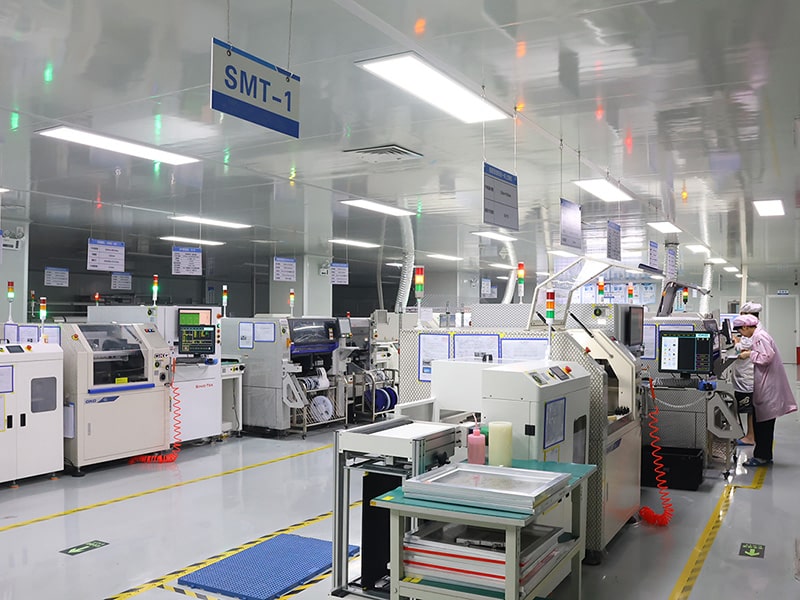
But some solder joints cannot be seen from the outside. BGA joints, for example, sit underneath the package, which is why X-ray inspection is used when hidden solder joints need to be evaluated.
Now imagine that one board has a solder bridge. That board may simply require rework.
If twenty boards begin showing the same bridge in the same location, the problem changes completely.
At that point, quality personnel need to look at the trend, review production records, and work with engineering to determine whether the cause lies in stencil design, printing, placement, reflow, or another part of the process.
That is why quality personnel do much more than decide whether a PCBA is acceptable.
NPI Engineer: Solving Problems Before the Line Starts
Many SMT problems are easier to fix before production begins.
This is where the NPI engineer becomes important.
For factories handling frequent new product introductions, NPI engineers may review whether a PCB is practical to assemble, whether component footprints match the selected parts, whether BOM and placement data are consistent, and whether the proposed manufacturing and inspection flow makes sense.
A problem that appears during production is not always a production problem.
Sometimes the root cause already exists in the PCB layout, pad geometry, component footprint, assembly drawing, or manufacturing data.
If those issues are found during NPI, they can often be corrected with relatively little disruption.
If they are discovered after volume production begins, the cost is usually much higher.
Material Management: Even the Fastest Placement Machine Needs the Right Parts
An SMT line can place thousands of components per hour.
But none of that matters if the wrong component reaches the machine.
Production planning, material control, and warehouse personnel are therefore an important part of the SMT operation, even though they may not spend much time standing beside the line.
Their work includes preparing components according to the BOM, coordinating production schedules, managing component lots and inventory, and handling unused materials after production.
Moisture-sensitive devices add another layer of control.
Exposure time, dry storage conditions, and baking status may need to be monitored according to the material requirements.
For products requiring traceability, component lot numbers, production dates, work orders, and sometimes serial numbers may also need to be linked to manufacturing records.
So SMT assembly is not simply a placement process.
Behind the machines is a material management system that makes sure the right component, from the right lot, reaches the right board at the right time.
Rework Technicians: Repairing a Board Is Still a Controlled Process
Even a stable SMT process may occasionally produce an assembly that needs correction.
Some defects can be repaired. Examples include component replacement, solder bridging, insufficient solder, and certain BGA or QFN rework operations.
But rework is not simply a matter of picking up a soldering iron and fixing the visible problem.
The technician needs to use an appropriate rework method for the package and defect involved, while avoiding damage to the component, PCB pads, nearby parts, or the board itself.
After rework, the assembly may need to go through inspection or testing again.
Depending on the issue, that could mean visual inspection, AOI, X-ray, electrical testing, or functional testing.
For high-reliability products, the rework itself may also need to be documented and controlled.
So, How Many People Does an SMT Line Actually Need?
There is no useful universal number.
A highly automated line producing the same PCB for long production runs may operate with relatively few direct operators.
A prototype or high-mix, low-volume factory is different.
There may be frequent material changes, feeder changes, program changes, first-article inspections, engineering reviews, and process adjustments. In that environment, fewer boards may be produced per run, but more engineering and production support can be required.
Shift patterns, product complexity, inspection requirements, factory organization, and automation level all affect staffing.
That is why statements such as:
“A factory has three SMT lines, so it should have around X employees.”
are not very meaningful.
The more useful question is whether the factory has the people and systems needed to support those lines.
Does it have experienced process engineers?
Can equipment problems be handled quickly?
Are AOI and X-ray results actually used to improve the process?
Are materials controlled and traceable?
Can production defects be investigated rather than simply reworked?
These factors tell you much more about the maturity of an SMT operation than headcount alone.
Modern SMT manufacturing reduces repetitive manual work. It does not eliminate the need for skilled people.
Machines provide speed, accuracy, and repeatability. Engineers, quality teams, supervisors, operators, and material personnel make sure those machines are used under the right conditions.
That combination is what turns a collection of automated equipment into a reliable SMT production line.