
When looking for a PCB assembly manufacturer for medical devices, many buyers start by comparing price, lead time, the number of surface-mount technology (SMT) lines, minimum component size, and whether the supplier offers automated optical inspection (AOI) and X-ray inspection.
These details are important, but they only answer part of the question.
For a real medical electronics project, the more important issue is whether the supplier can consistently build your prototypes, pilot runs, and repeat production orders according to your design documentation and quality requirements.
A simple double-sided SMT control board places very different demands on a supplier than a PCB with fine-pitch BGAs, programming, functional testing, and serial-number traceability. Impressive capability specifications are not especially meaningful if they are unrelated to your actual design.
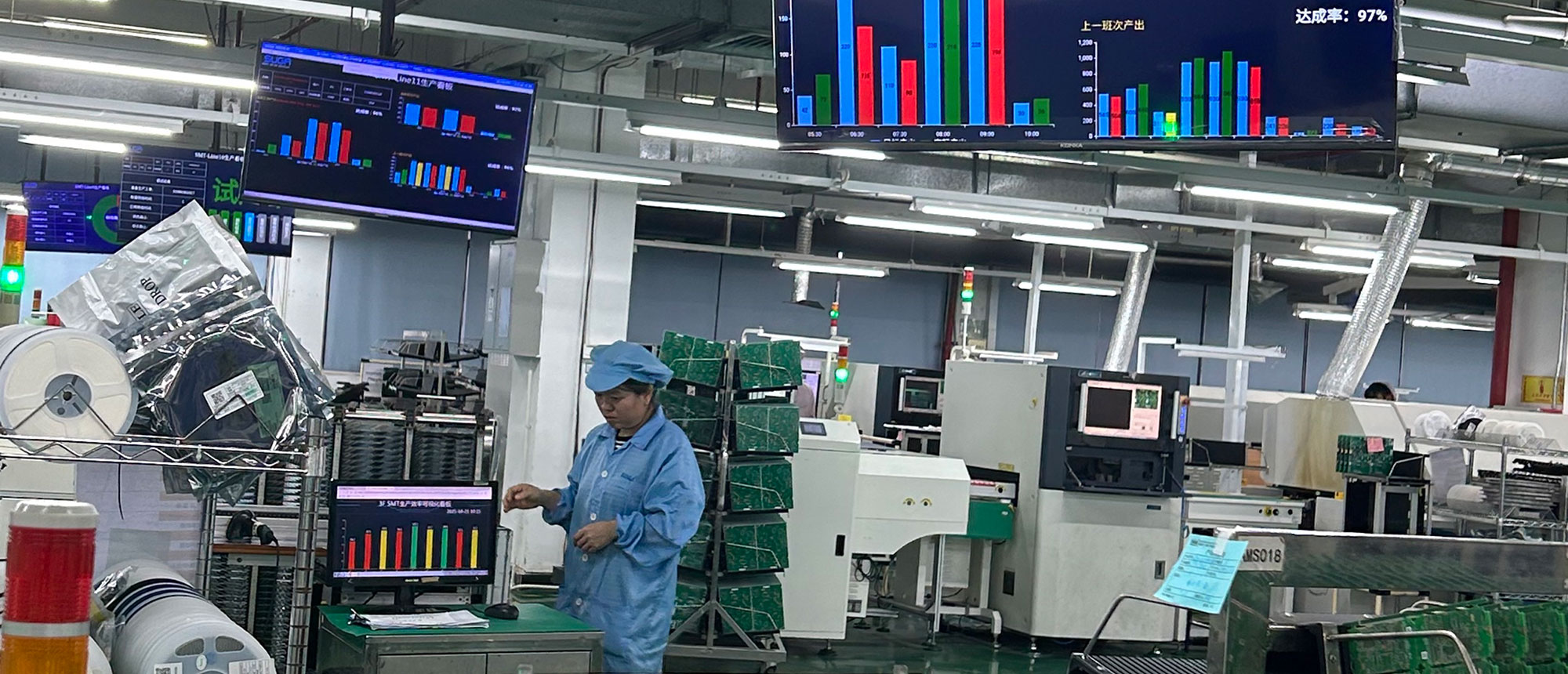
When evaluating a medical PCB assembly manufacturer, focus on the following areas:
- Quality systems and the scope of ISO 13485 certification;
- Whether the supplier’s PCB fabrication and assembly capabilities match your design;
- Inspection and testing plans;
- Component sourcing and substitute-part control;
- Traceability and revision control;
- Support from prototype through repeat production;
- Nonconformance and rework management;
- DFM support and engineering communication;
- Quotation scope, lead time, and commercial terms.
The right supplier is not necessarily the largest factory or the one with the lowest quote. It is the supplier that best matches your product, quality requirements, and current stage of production.
Table of contents
- 1. Define What Your PCB Assembly Project Actually Requires
- 2. Check ISO 13485, but Do Not Rely Only on a Certification Logo
- 3. Match Manufacturing Capability to Your PCB Instead of Chasing Headline Specifications
- 4. Do Not Just Ask Whether the Supplier Has AOI – Ask How Your Board Will Be Inspected
- 5. If Functional Testing Is Required, Do Not Just Confirm That the Supplier “Can Do FCT”
- 6. Do Not Evaluate Component Sourcing Based Only on the Total BOM Price
- 7. Find Out Whether the Supplier Can Answer: “Where Did the Components on This Batch Come From?”
- 8. Evaluate How the Supplier Manages Rev A and Rev B – Not Just How It Builds the First Batch
- 9. A Good Prototype Build Is Not Enough – Check Whether the Supplier Can Support Later Production
- 10. How Does the Supplier Handle Nonconforming Product?
- 11. The First DFM Review Is Also a Test of the Supplier
- 12. When Comparing Quotes, First Confirm That Everyone Is Quoting the Same Scope
- 13. Before Approving a Supplier, Use an Actual Prototype or Pilot Project for Further Validation
- 14. Quick Evaluation Checklist for Medical PCB Assembly Suppliers
- 15. What Warning Signs Should You Watch for When Selecting a Medical PCB Assembly Supplier?
- 16. Which Supplier Should You Choose?
- Frequently Asked Questions
- Does a Medical PCB Assembly Manufacturer Have to Be ISO 13485 Certified?
- Must Medical PCB Assembly Be Built to IPC Class 3?
- How Can I Verify a PCB Supplier’s ISO 13485 Certification?
- Should I Choose a Supplier That Offers Both PCB Fabrication and PCB Assembly?
- Does a Medical PCB Supplier Have to Provide Functional Testing?
- Can a Prototype Be Used to Determine Whether a Supplier Is Suitable for Later Production?
- Evaluating Medical PCB Assembly Suppliers?
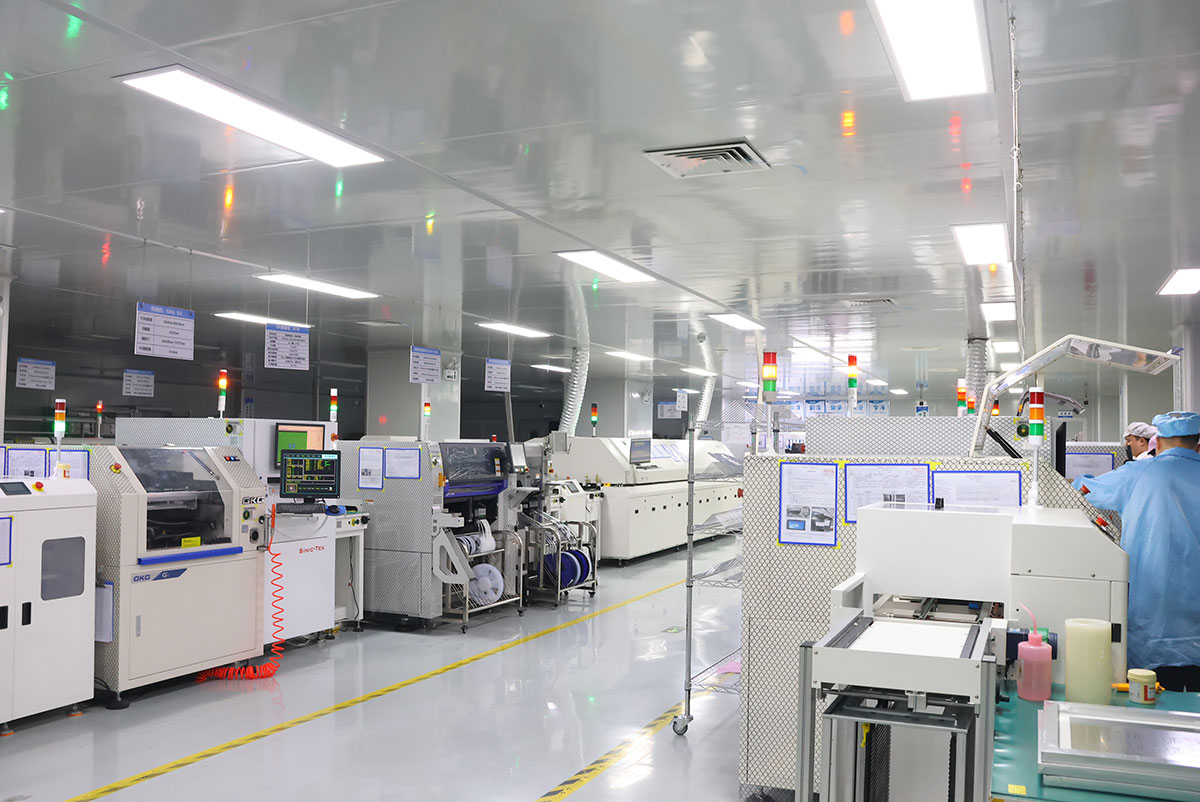
1. Define What Your PCB Assembly Project Actually Requires
Before comparing suppliers, clarify your own project requirements. Otherwise, it is easy to focus on equipment, headline specifications, and price while overlooking the capabilities that will actually affect project execution.
For example, a standard four-layer PCB with conventional SMT components and a small number of through-hole (THT) components may not require advanced HDI or ultra-fine-pitch assembly capabilities.
A different project that includes a 0.35 mm-pitch BGA, QFN packages, programming, functional testing, and component-lot traceability will require a very different supplier evaluation.
Before screening suppliers, define at least the following:
| Project Information | What to Confirm |
|---|---|
| PCB | Layer count, materials, HDI, rigid-flex, impedance requirements, etc. |
| Production Stage | Prototype, pilot, low volume, repeat production |
| Quantity | Initial build quantity and expected future demand |
| Assembly | SMT, THT, double-sided assembly, special connectors |
| Packages | BGA, QFN, LGA, fine-pitch packages, etc. |
| Programming | Whether MCU or EEPROM programming is required |
| Inspection | AOI, X-ray, or other project-specific inspections |
| Testing | ICT, functional testing, or customer-defined testing |
| IPC Requirements | Class 2, Class 3, or other project requirements |
| Traceability | Lots, components, serial numbers, and test records |
| Lead Time | Target lead time for prototypes and later production |
Listing these requirements first and then matching them against each supplier’s capabilities is much more effective than simply comparing marketing materials.
2. Check ISO 13485, but Do Not Rely Only on a Certification Logo
For medical electronics projects, ISO 13485:2016 is often an important part of supplier evaluation.
However, do not rely solely on an “ISO 13485 Certified” logo on the supplier’s website.
It is more important to confirm who the certificate belongs to and whether its scope covers the services you need.
Review the following details:
- Certificate holder;
- Name and address of the actual manufacturing facility;
- Certificate number;
- Expiration date;
- Certification body;
- Scope of certification.
The scope is especially important.
If you need PCB fabrication and PCB assembly, confirm that the certification scope covers the relevant manufacturing activities. Do not assume that every service is covered simply because the words “ISO 13485” appear on the website.
It is also important to avoid another common misunderstanding:
ISO 13485 is a quality management system standard. It does not mean that a particular PCB or complete medical device has been approved by a regulatory authority.
For important projects, request the formal certificate and verify the certificate holder, scope, and validity rather than relying only on a marketing page.
3. Match Manufacturing Capability to Your PCB Instead of Chasing Headline Specifications
Most manufacturers publish detailed process and assembly capability figures, such as maximum layer count, minimum trace and space, minimum component size, BGA pitch, HDI structures, X-ray, ICT, and FCT.
These specifications are useful references, but the goal is not simply to find the supplier with the most impressive numbers.
Ask a more practical question: Can this supplier consistently meet the requirements of my design?
PCB Fabrication Capability
If the same supplier will also handle PCB fabrication, confirm that it supports the materials and structures used in your project, such as multilayer PCBs, HDI, high-Tg FR-4, rigid-flex, controlled impedance, special materials, or special hole structures.
For a standard multilayer PCB project, there is no need to give extra credit simply because a supplier can manufacture more complex boards.
What matters is whether the supplier’s manufacturing range covers your design and whether the relevant processes are stable, routine capabilities.
PCB Assembly Capability
Assembly capability should be evaluated based on the actual components and board structure. Consider whether the project includes fine-pitch devices, BGA/QFN/LGA packages, double-sided SMT, THT, special connectors, or other components that require additional process controls.
If the PCB includes components with a pitch of 0.4 mm or finer, do not ask only, “Can you assemble BGA components?”
Instead, provide the actual package information, pitch, and PCB files so the engineering team can evaluate the design.
The key question is whether the supplier is suitable for your design, not whether it has the most impressive headline specifications.
4. Do Not Just Ask Whether the Supplier Has AOI – Ask How Your Board Will Be Inspected
PCB assembly manufacturers often list solder paste inspection (SPI), AOI, X-ray inspection, in-circuit testing (ICT), and functional testing (FCT) among their capabilities.
However, having a piece of equipment and using it as part of your project inspection plan are not the same thing.
For a PCB with BGA components, “How will the BGA solder joints be inspected?” is more useful than simply asking, “Do you have X-ray?”
Similarly, if a supplier lists AOI, confirm where it is used in the production process and what it covers.
Ask the supplier:
- How is solder paste printing inspected?
- Is AOI performed after SMT reflow?
- How are hidden solder joints, such as BGA joints, inspected?
- Is X-ray used for QFN/LGA packages when required by the project?
- How is the first article verified?
- How are THT solder joints inspected?
- How are defects isolated and handled after inspection?
The appropriate PCB assembly inspection and testing plan depends on the package types, board complexity, and project risks.
During supplier evaluation, whether the inspection plan matches the actual PCB is more meaningful than simply counting the number of machines.
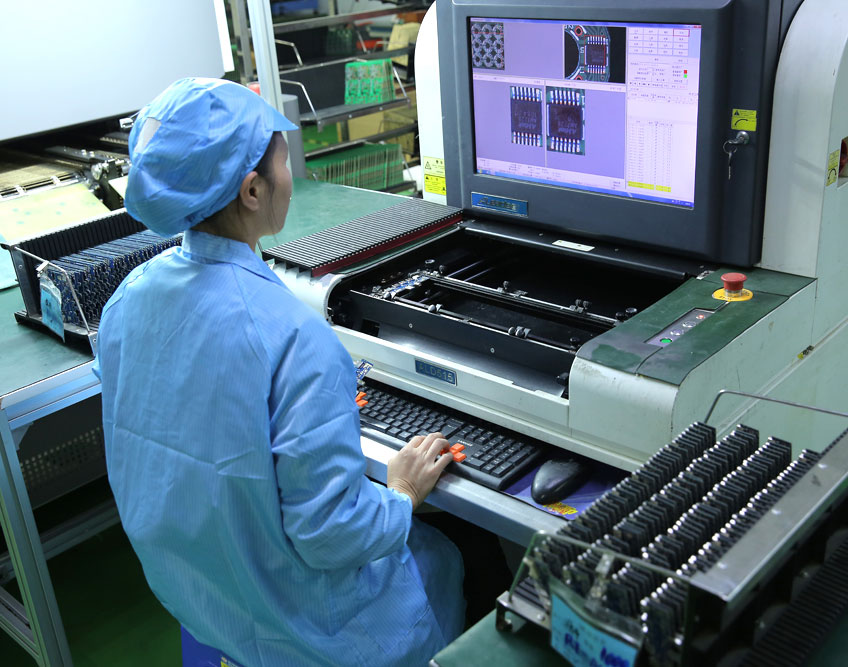
5. If Functional Testing Is Required, Do Not Just Confirm That the Supplier “Can Do FCT”
Many PCB assembly suppliers advertise “Functional Testing Available” on their capability pages.
But once functional testing becomes part of the project, many details need to be clarified in advance.
For example:
- Who provides the test program?
- Who defines the pass/fail criteria?
- Is a test fixture already available?
- Does the supplier need to build or integrate the fixture?
- Who maintains the test software?
- Must test results be saved?
- How are failed boards handled?
- How are firmware and test-procedure revisions controlled?
AOI and X-ray can help identify manufacturing, soldering, and certain assembly problems, but they do not automatically prove that every function of the PCB works correctly.
If the original equipment manufacturer (OEM) requires functional testing, define the test scope during the request-for-quotation (RFQ) stage.
Even if the detailed procedure is still under development, tell the supplier: “This project will require FCT at a later stage.”
This allows both sides to clarify engineering effort, fixture requirements, and quotation scope early.
At the same time, ICT and FCT should not automatically be treated as mandatory for every medical PCB.
Testing should be defined according to the specific PCB, product design, and customer-approved test plan.
6. Do Not Evaluate Component Sourcing Based Only on the Total BOM Price
In many PCB assembly projects, component cost represents a large portion of the total PCBA quotation.
When selecting a supplier, do not compare only the bill of materials (BOM) price. Also understand how the components will be sourced and controlled.
A component-sourcing review should cover several areas: whether sourcing channels are clearly identified, whether incoming inspection and moisture sensitivity level (MSL) controls are in place, whether lot information is recorded, and what approval and verification process is used when components have long lead times, are unavailable or obsolete, or must be purchased outside authorized distribution channels.
Sourcing outside the component manufacturer’s authorized distribution network does not automatically mean that a component is defective or counterfeit. When a part is obsolete, severely constrained, or unavailable through normal channels, an independent distributor or broker may need to be considered. The important questions are whether the purchase is approved by the customer and whether the supplier applies appropriate source verification, authenticity checks, and incoming inspection.
One particularly important question is:
If a component on the original BOM is unavailable, who has the authority to approve a substitute?
A reasonable process is for the supplier to notify the customer when a part is unavailable, discontinued, or subject to an abnormal lead time, and then provide candidate alternatives when appropriate.
However, for a customer-controlled BOM, the manufacturer should not replace a component simply because another part “looks similar.”
Medical electronics projects should define component substitution and change-approval procedures in advance.
7. Find Out Whether the Supplier Can Answer: “Where Did the Components on This Batch Come From?”
“Traceability” can easily become a polished but vague marketing claim.
During an actual supplier review, ask more specific questions.
For example:
If a problem is discovered in a product batch six months from now, can you identify which PCB lot and which component lots were used?
Depending on the project requirements, traceability may range from lot-level records to full unit-level traceability linked to individual serial numbers.
Common records may include:
- PCB lot;
- Component lot and source;
- Serial number;
- Test results;
- Firmware and rework records.
Some projects require only lot-level records. Others may require serial numbers to be linked to test results.
When selecting a supplier, the real question is:
Can its traceability system meet the requirements of your project and quality system?
Do not simply look for a company that claims to offer “full traceability.”
8. Evaluate How the Supplier Manages Rev A and Rev B – Not Just How It Builds the First Batch
Completing the first prototype is only the beginning of a project.
Later changes may include PCB layout revisions, BOM updates, component substitutions, firmware upgrades, test-procedure updates, or process changes.
Suppose the first prototype uses:
PCB Rev A + BOM Rev A + Firmware V1.0
The PCB is then revised to Rev B, one component is replaced, and the firmware is updated to V1.1.
The next production run must ensure that:
Rev B + the updated BOM + Firmware V1.1 are correctly combined.
The supplier should have clear revision and change-control procedures to ensure that the correct versions of the Gerber files, BOM, firmware, and test procedures are used together.
You should also understand how engineering change orders (ECOs) are released, how substitute parts are approved, how obsolete files are withdrawn, and whether process changes are communicated in advance.
For repeat production, strong revision control can matter more than a headline manufacturing specification.
9. A Good Prototype Build Is Not Enough – Check Whether the Supplier Can Support Later Production
When customers first contact a supplier, their immediate requirement may be only 10, 20, or 50 boards.
However, medical electronics projects often progress through:
Prototype → Pilot → Low-Volume Production → Repeat Production
Do not ask only, “Can you build these 10 boards?” Also ask, “If this build meets the agreed requirements, can you continue supporting 100 boards, 500 boards, or repeat orders?”
At this stage, capacity is not the only consideration. You should also look at whether prototypes are built using controlled documentation, whether later batches can continue under the same project records, whether BOM and test revisions remain consistent, and whether sourcing and testing methods can adapt as quantities change.
A supplier’s theoretical maximum capacity is not the only deciding factor.
For many medical electronics companies, the ability to reliably support their actual volume range is more important.
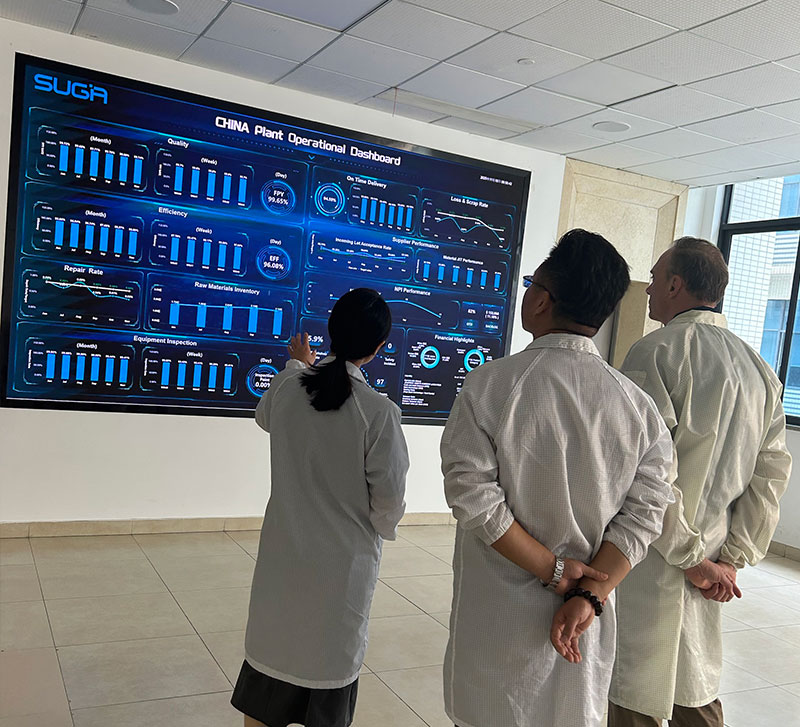
10. How Does the Supplier Handle Nonconforming Product?
No electronics manufacturing process can reasonably promise that problems will never occur.
Asking only “What is your yield?” is not enough. A more practical question is: “If a problem occurs, how will you handle it?”
Ask about the following:
- How are nonconforming products isolated?
- Is there a documented nonconformance reporting (NCR) process?
- How is rework approved?
- Is the board re-inspected after rework?
- Is retesting required?
- Are recurring defects subject to root-cause analysis?
- How are corrective actions tracked?
- Which issues must be reported to the customer?
If a soldering defect is found on a PCB, correcting the joint alone does not establish that the board is ready to return to production.
Identifying the issue, recording the rework, re-inspecting the board, and investigating the root cause when the problem recurs reflects a much stronger level of quality control.
For long-term projects, the latter approach is usually more important.
11. The First DFM Review Is Also a Test of the Supplier
“Communication is important” applies to almost every supplier, so the statement alone is not very useful.
What is more revealing is:
How does the supplier handle your engineering issues?
During the first RFQ or prototype-stage design for manufacturability (DFM) review, assess the supplier’s engineering support. Pay attention to whether:
- The engineering team actually reviews the Gerber files and BOM;
- File revision conflicts are identified;
- Specific DFM issues are raised;
- The issues are described clearly enough for an engineer to understand;
- The supplier explains the reason instead of simply saying “it cannot be done”;
- Technical questions receive technical answers;
- Technical issues can be resolved directly with the engineering team, rather than being repeatedly relayed without resolution through a salesperson.
A supplier’s website may advertise “Professional Engineering Support,” but the most useful evidence usually comes from the first real file review.
If the supplier can accurately explain where the risk is, why it matters, and what needs customer confirmation, that is much more meaningful than simply saying, “We have a professional engineering team.”
12. When Comparing Quotes, First Confirm That Everyone Is Quoting the Same Scope
For the same PCB project, unit prices from different suppliers may appear very different.
The following is only a simplified illustrative example and does not represent actual PCB assembly pricing:
Supplier A: $18 per board; Supplier B: $22 per board.
You cannot conclude that Supplier A is cheaper based only on these two numbers.
First confirm whether both quotations cover the same scope and are based on the same medical PCB assembly RFQ files and requirements.
For example:
| Quotation Item | Supplier A | Supplier B |
|---|---|---|
| PCB Fabrication | Included | Included |
| Components | Included | Included |
| SMT Assembly | Included | Included |
| THT Assembly | Additional charge | Included |
| X-ray | Additional charge | Included |
| Programming | Not included | Included |
| Functional Testing | Not included | Included |
| Test Fixture | Not confirmed | Additional charge |
Once differences in scope are accounted for, the apparent price gap may narrow or disappear, and the lower quoted unit price may not represent the lower total cost.
In addition to unit price, review the minimum order quantity (MOQ), non-recurring engineering (NRE) charges, stencil and fixture charges, other engineering fees, component lead times, production lead time, payment terms, shipping costs, and pricing for repeat orders.
A low quote is not automatically a warning sign. An unclear quotation scope is more concerning.
13. Before Approving a Supplier, Use an Actual Prototype or Pilot Project for Further Validation
Websites, capability sheets, and certificates describe what the supplier claims it can do. A real project shows how it actually performs.
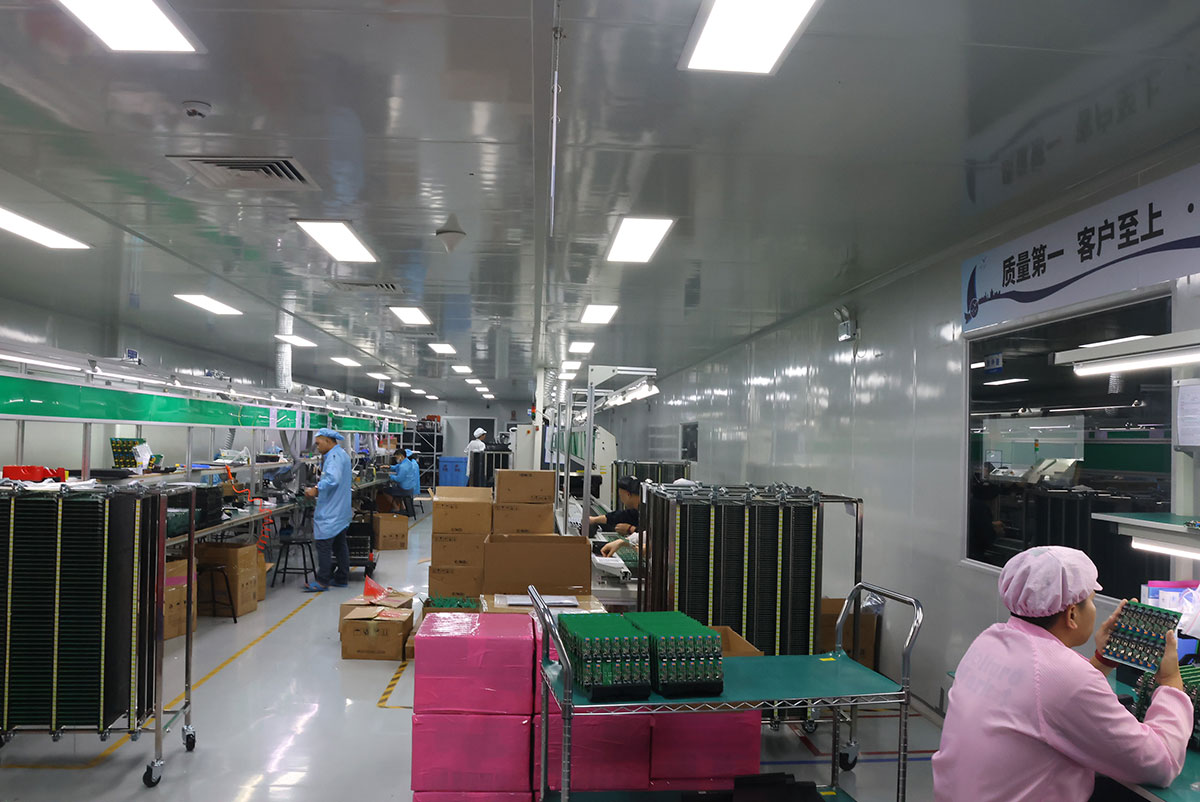
If you already need a prototype or pilot build, use the project to observe file review, DFM feedback, BOM issue handling, component-sourcing communication, actual lead time, assembly quality, inspection records, test execution, response to problems, packaging, and documentation.
This does not mean creating an unnecessary order simply to “test” a supplier.
A more practical approach is to use a prototype or pilot build that you already need as part of the supplier-validation process.
Especially before entering long-term repeat production, this real project experience is often more valuable than a marketing document.
14. Quick Evaluation Checklist for Medical PCB Assembly Suppliers
If you are comparing several candidate suppliers, the following checklist can provide a useful starting framework.
| Evaluation Area | Questions to Confirm | Priority |
|---|---|---|
| ISO 13485 | Where required or claimed, is certification valid and is the relevant manufacturing scope covered? | High |
| PCB Capability | Can the supplier fabricate the actual PCB structure? | High |
| Assembly | Can it handle the components and packages used in the design? | High |
| Inspection | Is there an inspection plan suitable for the project? | High |
| Testing | Does it support the required ICT, FCT, and programming? | Project-dependent |
| Component Sourcing | Are sourcing channels and substitute-part approvals clearly controlled? | High |
| Traceability | Can the supplier meet the required level of traceability? | High |
| Change Control | How are PCB, BOM, and firmware changes managed? | High |
| New Product Introduction (NPI) | Can the supplier support the project from prototype through later production? | High |
| Quality Response | How are nonconforming products, rework, and corrective actions handled? | High |
| Engineering Support | Is DFM and engineering communication effective? | Medium-high |
| Commercial Fit | Are the price, MOQ, volume, and lead time suitable for the project? | High |
There is no need to use exactly the same weighting for every project.
A simple prototype project may place more emphasis on engineering responsiveness and lead time.
A medical electronics project already in repeat production may place more emphasis on component control, traceability, revision control, and batch consistency.
Your supplier scorecard should be built around your own project rather than copied from a generic template.
15. What Warning Signs Should You Watch for When Selecting a Medical PCB Assembly Supplier?
No single issue can immediately prove that a supplier is unreliable.
However, if several of the following conditions occur at the same time, further verification is warranted:
- Where ISO 13485 certification is required or claimed, the supplier cannot provide a valid certificate or clearly explain the certificate holder and scope;
- The website lists many capability figures, but the engineering team cannot confirm whether they apply to your design;
- The supplier cannot clearly explain how BGA, QFN, or similar packages will be inspected;
- Substitute parts can be changed by the supplier without a clear approval process;
- The supplier cannot explain how component and production lots are traced;
- Revision control for Gerber files, BOMs, and firmware is unclear;
- The supplier cannot clearly confirm whether X-ray, programming, or testing is included in the quotation;
- Engineering questions receive only vague, sales-oriented answers.
One common assumption should be avoided:
“Low price = unreliable.”
That is not necessarily true.
Suppliers may differ in sourcing channels, production-line utilization, regional labor costs, overhead, and profit structure.
The real warning sign is:
The quote is low, but you cannot determine what it includes, or key manufacturing requirements remain unconfirmed.
16. Which Supplier Should You Choose?
Selecting a medical PCB assembly manufacturer should not be reduced to three questions: Who has more SMT lines? Who is cheapest? Whose website looks the most professional?
A more complete evaluation should consider:
- Quality systems
- PCB and assembly capabilities
- Component control
- Inspection and testing
- Traceability and revision control
- Support from prototype through later production
- Engineering communication
- Cost and lead time
The right supplier does not necessarily have the most advanced specifications in every category.
More importantly, the supplier should be able to:
Understand your PCB and project requirements, manufacture according to approved production documentation, and maintain controlled production when the BOM, PCB, firmware, or testing requirements change.
For medical electronics projects, this is often more practical than simply choosing the manufacturer with the most impressive specifications or the lowest quote.
Frequently Asked Questions
Does a Medical PCB Assembly Manufacturer Have to Be ISO 13485 Certified?
There is no single yes-or-no answer for every project.
ISO 13485 is a quality management system standard for medical devices. For supply-chain projects that require medical-device quality system controls, it is often an important supplier-evaluation criterion.
Whether it must be a mandatory purchasing requirement depends on the OEM’s quality system, the supplier’s role, the target market, and the project requirements.
When evaluating a supplier, do not confirm only whether it “has ISO 13485.” Also review the certificate holder, certification scope, and validity.
Must Medical PCB Assembly Be Built to IPC Class 3?
Not necessarily.
For PCB assembly projects, Class 2 or Class 3 should be selected based on intended use, reliability requirements, risk assessment, and customer purchasing documents. An assembly should not automatically be assigned Class 3 simply because it is used in medical equipment.
An IPC class is not a complete, standalone manufacturing specification. The project should also identify the applicable acceptance and soldering standards, their revisions, and any additional requirements.
How Can I Verify a PCB Supplier’s ISO 13485 Certification?
At a minimum, check:
- Company name on the certificate;
- Factory address;
- Certificate number;
- Expiration date;
- Certification body;
- Scope.
Make sure the certification scope is relevant to the PCB fabrication or assembly services you require.
Should I Choose a Supplier That Offers Both PCB Fabrication and PCB Assembly?
Not necessarily, although it can be advantageous for some projects.
Having one supplier coordinate PCB fabrication and assembly through a turnkey PCB assembly project can reduce supply-chain interfaces and make it easier to resolve DFM issues between fabrication and assembly.
However, the final decision should be based on whether the supplier’s PCB capability, assembly capability, quality responsibilities, quotation transparency, and engineering support match the project.
Do not assume that a one-stop supplier is automatically the better choice.
Does a Medical PCB Supplier Have to Provide Functional Testing?
Not necessarily.
Some projects may require only customer-defined inspection and electrical testing, while others may require complete functional testing.
If you want the PCB assembly manufacturer to perform FCT, define the test requirements, pass/fail criteria, and responsibilities for the test program and fixture. The customer should approve the test requirements and any supplier-developed procedure before use.
Can a Prototype Be Used to Determine Whether a Supplier Is Suitable for Later Production?
A prototype is a valuable opportunity to evaluate a supplier, but it should not be the only basis for approval.
In addition to the quality of the first build, continue evaluating component sourcing, revision control, testing, traceability, batch consistency, future volume capability, and response to problems.
If the project is expected to move from prototype to pilot or low-volume production, consider the controls required for later production from the very first build.
Evaluating Medical PCB Assembly Suppliers?
If you already have Gerber files, a BOM, expected quantities, and project requirements, a more effective approach than comparing capability figures on supplier websites is to have an engineering team evaluate the actual manufacturing scope based on your files.
SugaMed can review PCB fabrication, component sourcing, SMT/THT assembly, inspection, programming, and customer-defined testing requirements based on your current project documentation, and identify any information still needed before quoting.
Even if the project is still at the prototype or new product introduction (NPI) stage and some testing documentation has not been finalized, you can submit the available files for an initial review.